

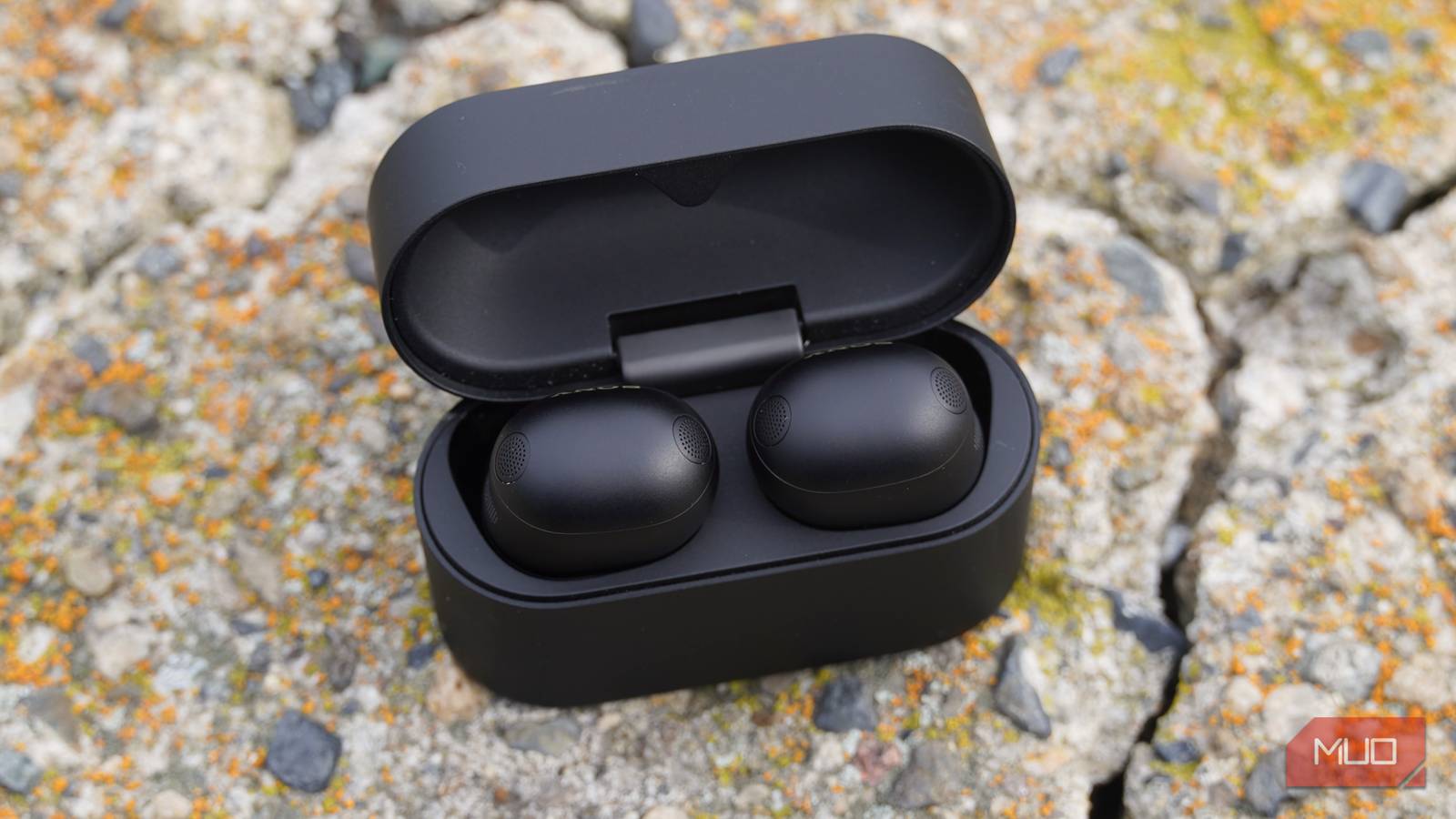
The most highly-anticipated audio launch of 2026 is here: Sony’s WF-1000XM6 earbuds are official, and I’ve been testing them for the past two weeks. The upgrades include a redesigned audio driver, one extra microphone per earbud, a more powerful QN3e processor, and a completely new look. A lot has changed from the WF-1000XM5, and it’s mostly for the better. There were a few items on my wishlist Sony didn’t hit, such as Qualcomm aptX support and longer battery life, but the company seemingly covered the rest of the upgrades I hoped for.
The redesign is a huge success for Sony, as I think the WF-1000XM6 both look and fit better than prior models. The earbuds’ quality and tuning sounds the best I’ve heard from recent releases straight out of the box, requiring minimal changes. The software is solid, too, with support for Bluetooth LE Audio, Auracast, multipoint connection, and variable listening modes. The Sony WF-1000XM6 finally feel like a complete package — and they’ll have to be to justify their higher price point.


8/10
- Microphones
-
8 (4 per earbud)
- Supported codecs
-
SBC, AAC, LDAC, LC3
- Chip
-
Sony QN3e
The Sony WF-1000XM6 are truly-wireless earbuds with redesigned audio drivers and a new QN3e processor for impressive sound quality. They feature a complete redesign that shrunk down the buds and changed their shape, improving comfort. Sony’s LDAC codec is onboard as a hi-res Bluetooth audio streamer, and various ANC modes are supported.
- Extra mics and new processor deliver excellent ANC power
- Redesign improves fit, and I love the new look
- Expanded 10-band EQ and in-app fitting guide
- No support for Qualcomm’s aptX suite of lossless codecs
- Spatial audio relies on Android system sound
- Foam ear tips are still brittle and slightly uncomfortable
Sony provided WF-1000XM6 earbuds for this review, but the company had no input in this article and did not see it before publishing.
Sony WF-1000XM6 pricing and availability
Sony officially revealed the WF-1000XM6 on Feb. 12, 2026 and the earbuds became available for purchase on that same date. You can buy them now directly from Sony or through third-party retailers like Amazon or Best Buy. The earbuds retail for $329.99 in the U.S. or $429.99 CAD in Canada.
The Sony WF-1000XM6 are available in either Platinum Silver and Black colorways. I reviewed the Black version of the WF-1000XM6, and you’ll see them pictured throughout this review. In the box, you get the WF-1000XM6 earbuds, alternate ear tip sizes, and a short charging cable.
- Microphones
-
8 (4 per earbud)
- IP rating
-
IPX4
- Supported codecs
-
SBC, AAC, LDAC, LC3
- Color
-
Platinum Silver, Black
- Chip
-
Sony QN3e
- Spatial Audio
-
Only with Android 13 and up
- Features
-
DSEE Extreme, 10-band EQ, Auracast, Multipoint, Fast Pair, and Swift Pair
- Special feature
-
360 Reality Audio
- Port
-
USB-C
- Earbuds battery life
-
8 hours
- Charging case battery life
-
16 hours (total 24 hours)
Sony overhauled the WF-1000XM6 design, and I love it
I still prefer earbuds with stems or wingtips, but the improvement here is massive
If you have a forgiving ear shape that works well with earbuds from most brands, consider yourself lucky. I have picky ears, and my right ear canal is smaller than my left, making finding earbuds that fit tricky. The last-gen Sony WF-1000XM5 simply didn’t stay in my ears comfortably, even with the smallest ear tip size. I’m sure they sound as good as everyone says, but they didn’t work for me due to their odd shape, large size, and hybrid foam ear tips.
Sony must’ve been listening, because the WF-1000XM6 redesign checks almost all of my boxes. The earbuds now use a matte plastic finish again and sport a bean-shaped chassis. It might look strange to Sony earbud fans, but it’s a godsend for comfort. The shape of the earbuds matches the contour of your outer ear, and the WF-1000XM6 sit naturally when inserted as a result. While they can look larger than the WF-1000XM5 to the untrained eye, the newer model is actually 11% smaller, and I’m thrilled to hear that.

As for the overall fit, there’s still clearly room for improvement. Sony’s hybrid silicone/foam ear tips are quite tight in my ear. This is a positive in the sense that I never felt like the Sony WF-1000XM6 earbuds were going to fall out of my ears. On the other hand, I still find purely silicone ear tips to be more comfortable. While we’re on the topic of the ear tips, they feel a bit more brittle than I’d prefer. You can see throughout this article’s photos that after just a few weeks of wear, swapping out tip sizes, and cleaning the earbuds, the ear tips are already starting to wrinkle.
That said, many people prefer foam ear tips for comfort and enhanced passive sound isolation, so what is a con for me might be a pro for you. One thing we can all appreciate is the built-in mesh grille on each ear tip — this ensures earwax and gunk will never clog up the audio driver.

The redesigned charging case is slightly taller and now takes the shape of an elliptic cylinder. I prefer this look compared to the WF-1000XM5’s curvy charging case, but there’s no doubt the older model feels smaller in your pocket. Much of the other charging case details are the same, including the USB-C port, pairing button, wireless charging support, and LED status light. The new charging case’s status light rests behind the plastic, so it’s nearly impossible to see when the light isn’t active.
The earbuds and charging case combine to provide up to 24 hours of battery life. The earbuds offer eight hours of listening time with ANC enabled, and the charging case adds an extra 16 hours of power.
Sound quality and ANC power are excellent, as usual
You can thank a redesigned audio driver, eight mics, and new
Sony didn’t just redesign the outside of the WF-1000XM6 — it also revamped the internals, starting with the audio drivers. The company says the new diaphragm design uses different materials for the dome and edge, which allows one driver to create detailed and accurate sounds across the soundstage. This helps the Sony WF-1000XM6 provide deep bass, perceptible mids, and crisp highs. I couldn’t be happier with the out-of-box tuning of these earbuds. At a time when too many audio brands are shipping earbuds with bass-heavy tuning, Sony found the right balance here.
I wouldn’t call the Sony WF-1000XM6 balanced; the word I would use instead is rich. These earbuds sound vibrant and engaging across genres, showcasing certain parts of the soundstage depending on the song. When I’m listening to hip-hop, rap, and R&B tracks from the likes of Doechii, King Tee, or Leon Thomas, you can sense the strong bass throughout the music. Crucially, the low-end sounds don’t overpower the mids and highs. I can hear the click of a drumstick against a rim or the consistent patter of a hi-hat while the bass is booming. There’s excellent separation between the various parts of the soundstage, and this elevates the WF-1000XM6 listening experience.
Switch to an indie song or an emotional ballad, and all of a sudden, the strong bass presence fades to the background. Instead, you’ll find sharp piano notes and reverberant vocals. This happens without user input, and it goes to show how stellar the Sony WF-1000XM6 earbuds are tuned straight out of the box. I didn’t feel the need to touch the equalizer, which is rare.

As for the hardware, each earbud now features four microphones onboard instead of three. The new Sony QN3e audio processor steals the show, enabling better call quality, ANC performance, and sound quality. The included digital-to-analog converter (DAC) and amplifier are both improved, and the Integrated Processor V2 now supports 32-bit processing, up from 24-bit.
Sony claims the WF-1000XM6 block 25% more noise than their predecessor, and I believe that. I took the earbuds out into the world, from noisy coffee shops to public parks, and the default active noise-canceling mode did an excellent job at blocking out unwanted noise. It did so without requiring me to crank up the volume or creating extra ear pressure. The transparency mode is solid, too — it’s overly sensitive, amplifying high-pitched sounds, like sand scratching against a concrete path as people walk by. I’d rather have a transparency mode that lets too much noise in than one that does the opposite, so this is fine with me.
The Sony WF-1000XM6 pass the buck onto other apps and services for spatial audio, which is really disappointing. It leverages Android’s built-in spatial audio with head tracking and taps into Sony’s 360 Reality Audio with supported content. However, I much prefer Bose’s approach to spatial audio on the QuietComfort Ultra Gen 2 earbuds. Bose has its own “immersive audio” experience that works independently of your device, or its apps and content. This ensures you’re always able to experience spatial audio, rather than needing to rely on supported apps and content.
Call quality can be described as just fine. My voice sounded warm and lacked clarity when picked up by the WF-1000XM6 microphones. This is likely just a limitation of the earbuds’ form factor. Without a stem moving the microphones closer to your mouth, it’s harder for wireless earbud microphones to accurately catch your voice.
Sony’s companion app is full of helpful settings
I do wish there was better spatial audio support and more hi-res codecs

The Sony WF-1000XM6 pair with the Sony Sound Connect companion app, and it includes new features this time around. The earbuds now support a 10-band EQ for double the customization. I didn’t need to tweak the sound signature at all, but it’s always nice to retain the option. Other cool listening modes include a “background music” toggle that simulates the experience of listening to music in a coffee shop or store.
The setting you want to watch out for is under the Connection tab, and it’s called Bluetooth Connection Quality. There are three options here: Prioritize Sound Quality, Prioritize Stable Connection, and Low-Latency. Pick the first one if you want LDAC hi-res Bluetooth listening, pick the second if you want a reliable connection, and pick the last option if you want to use Bluetooth Low Energy Audio features. You don’t want to buy the WF-1000XM6 earbuds for their LDAC support and forget to enable it.
LDAC is a great and highly-compatible Bluetooth audio codec that supports a bitrate of up to 990 kbps. It’d be nice to see Qualcomm’s aptX suite of hi-res audio codecs, but it’s hard to say they’re sorely missed. LDAC is better on average and works with more devices, so it’s easy to understand why Sony went with its own solution. As a general rule, more options would be better.

aptX vs. LDAC: What’s the Difference?
Want your music to sound better than ever? Choosing headphones, earbuds, or speakers with the best codec is where to start.
Should you buy the Sony WF-1000XM6?
You should buy the Sony WF-1000XM6 if:
- You want premium ANC earbuds with support for LDAC.
- You like Sony audio, but didn’t like the design and fit of the WF-1000XM5.
- You value an excellent out-of-box sound signature with support for a 10-band EQ for further tuning.
You should NOT buy the Sony WF-1000XM6 if:
- You need features like Qualcomm aptX Adaptive or native spatial audio support.
- You don’t like thick foam ear tips or large earbud charging cases.
- You’d rather buy cheaper, but still outstanding, earbuds.
The biggest problem with the Sony WF-1000XM6 earbuds might be their starting price point. I’m not the biggest fan of Sony’s general earbud shape and my ears hate the feel of foam ear tips, and yet the WF-1000XM6 feel way more comfortable than the WF-1000XM5. I can comfortably wear the WF-1000XM6 earbuds for long listening sessions without them falling out, which I couldn’t say about their predecessor. The sound signature, active noise-canceling power, and LDAC support are all excellent qualities — the $330 price tag is just hard to stomach.
For perspective, the two main competitors to the Sony WF-1000XM6 are both cheaper. The AirPods Pro 3 retail for $250 and the Bose QuietComfort Ultra Gen 2 earbuds will run you $300. I’ve tested them all for weeks at a time, and let me tell you, the gap between the quality of each of these earbuds is minuscule. Whether you prefer one over the other will likely come down to personal preference, like how I love the Bose earbuds for their secure fit with silicone ear tips and stabilizer.
In a market this competitive, the reason to choose the WF-1000XM6 over the competition is for Sony’s audio tuning and LDAC support. While I would’ve loved to see Snapdragon Sound here, the simple fact is that LDAC is far more compatible, and it’s the hi-res Bluetooth codec most people can actually use. All told, aside from the higher price point, Sony nailed it.
- Bluetooth
-
Yes, LE Audio supported
- Microphones
-
8 (4 per earbud)
- IP rating
-
IPX4
- Supported codecs
-
SBC, AAC, LDAC, LC3
- Color
-
Platinum Silver, Black
- Chip
-
Sony QN3e
While the omission of proper spatial audio and Qualcomm’s aptX suite of codecs looms large, the more-compatible LDAC should more than make up for it. With great sound, a more comfortable design, and powerful ANC, the Sony WF-1000XM6 are right up there with the best wireless earbuds.
