

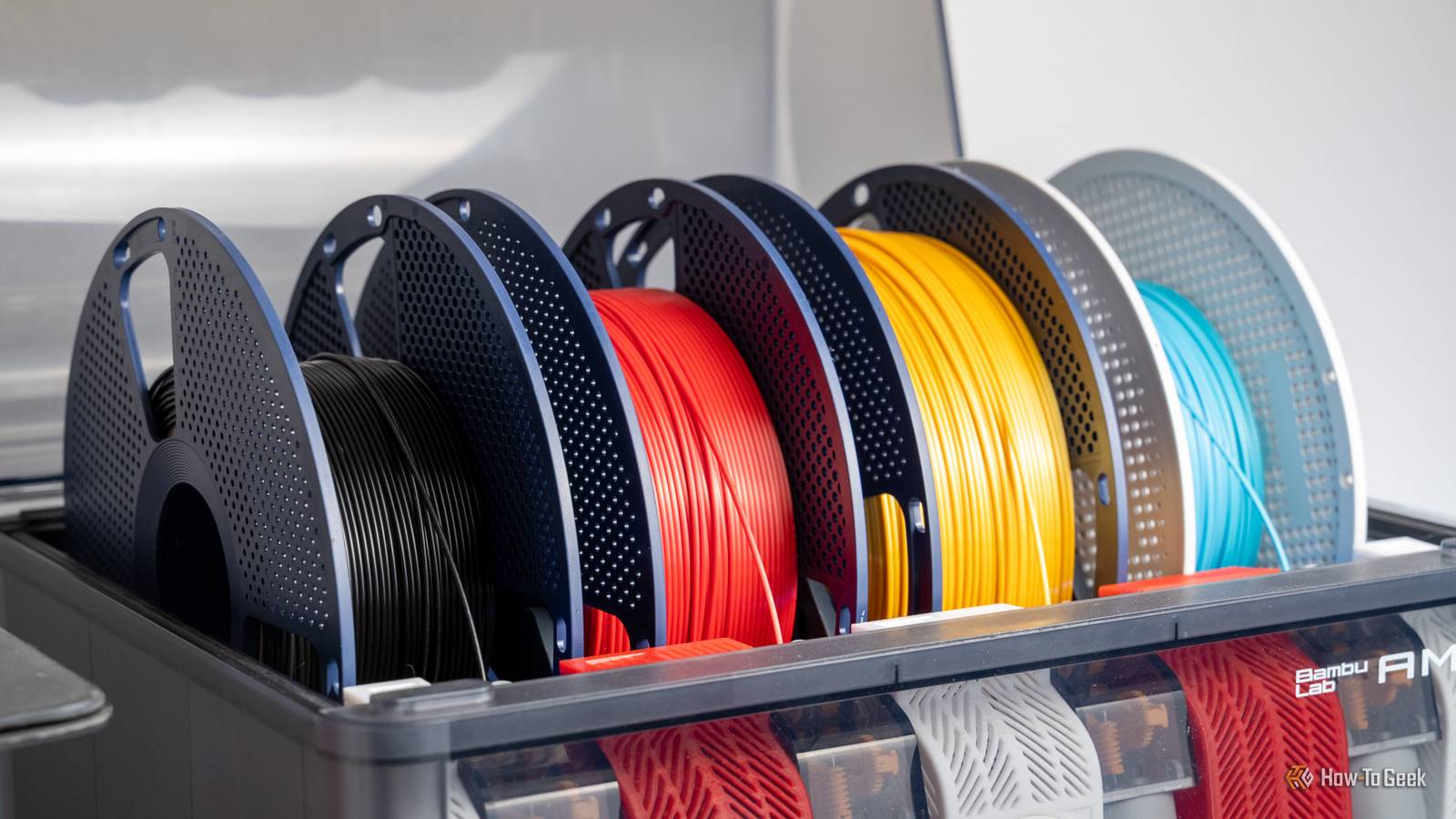
I used to think that buying cheaper filament was a compromise to print quality. After testing both first- and third-party filaments, my stance has changed. Here’s why I stopped buying name-brand filament and what I do instead.
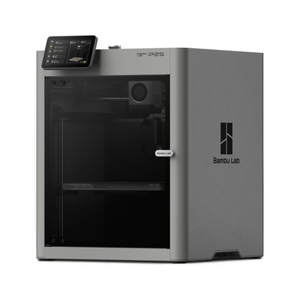
- Build Volume
-
256x256x256mm
- Printing Speed
-
600mm/s
The Bambu Labs P2S 3D printer is ready to go out of the box and can have you printing within 15 minutes. It features up to 20-color printing with the AMS unit, has an upgraded built-in camera for remote monitoring and time lapses, and has an enclosed body for printing even high-temperature filament.
Everyone raves about name-brand filament—for good reason
Premium filament prints well and has well-documented starter profiles

One of the main reasons to go with name-brand filaments like Bambu Lab is for the extra benefits they come with. For instance, Bambu Lab has filament profiles built for all of the filament they sell first-party because they make printers and filament.
For those who use Bambu Lab’s AMS system, the in-house filaments are detected by RFID chips so the printer and slicer know what settings to use without you even having to touch anything.

These features make for a compelling reason to buy first-party filaments, even though they’re more expensive. There are also a lot of people using those filaments, so there’s a lot of support in the community for it.
Really, if you have the cash, there’s no reason not to buy first-party name-brand filament. However, even if you have all the money in the world, I’d still say to consider buying non-first-party filament, because the differences might not be as big as you think.
Do the research—Bambu doesn’t even make its own filament
SUNLU, Polymaker, and ELEGOO are among the manufacturers that Bambu Lab sources from

I have been buying ELEGOO PLA for nearly two years now, and have zero complaints about it. The filament prints well, is consistent batch to batch, and is wildly affordable. I normally buy a 4-pack of black PLA for around $12.50 per roll, which is over 50% less than what Bambu Lab charges for their filament unless you buy in bulk. I recently switched to SUNLU, which offers their PLA+ 2.0 at just under $11 per roll when you order a 4-pack.
I was actually shocked to realize that Bambu doesn’t make most of its own filament. Some filaments are made in-house, but a majority of them are white labels from SUNLU, ELEGOO, and Polymaker (among other brands). I had been buying what I thought was “cheap” filament for years, but it was actually almost the exact same stuff as Bambu’s filament.
Now, I do need to point out that even though SUNLU makes Bambu filament and SUNLU filament, there’s no guarantee they’re identical. Bambu does have some unique formulations they have their third-party manufacturers use for their in-house filament—but the base is still the same.
Going with cheaper filament options saves money without sacrificing quality
Though Bambu Lab has some proprietary formulas, buying the right cheap filament is still a great idea

I have Bambu Lab, ELEGOO, and SUNLU filament in my P2S’ AMS right now, and I can’t tell a difference in print quality. One is PLA Basic (Bambu), one is PLA+ 2.0 (SUNLU), and one is basic PLA (ELEGOO). They all print almost (if not exactly) the same.
I’m not even using custom print profiles for the filaments, either. I’m just using Bambu’s PLA Basic profile for all three filaments and the results are the same. They print at the same speed with the same quality, except that two of the filament brands are affordable while the other is twice the cost.
If you’re on the fence with trying non-Bambu filament, give it a shot. Sure, SUNLU and ELEGOO don’t have the same RFID tech that Bambu has in their rolls, but all it takes is a quick click in the slicer and you’ve selected a filament profile. SUNLU’s latest filament rolls are also plastic and refillable, just like Bambu.
Unless there’s a very specific filament that you need, or you’re buying in bulk, there’s no need to buy name-brand 3D printer filament anymore. Third-party filament works just the same at a fraction of the price.
