

Ghana’s National Identification Authority (NIA) announced the addition of a digital wallet to the Ghana Card, the identification card used for everything from SIM registration to passport applications.
The move collapsed identity and payments into a single physical object for the first time at a national scale in West Africa.
The new payments feature allows users withdraw cash from ATMs, make payments in stores and online, send money internationally to over 200 countries, and access services like insurance and emergency assistance.
Current holders can activate the wallet through the MyCitizens app or by dialing *402#.
To understand how significant this is, you need to go back to the original design.
The Ghana Card was originally built with three profiles: the e-ID (already in use), the e-passport (activated in 2022), and the now-launched e-wallet. The payments layer was never an afterthought. It was the third pillar of a deliberate architecture.
NIA Executive Secretary Yayra Korku Deku told local media that the digital wallet enables holders to easily make or receive payments using the Ghana Card as an authentication tool, and described the initiative as part of the authority’s income-generating efforts.
That last point matters. The NIA is not building this as a public service alone. It is building a business.
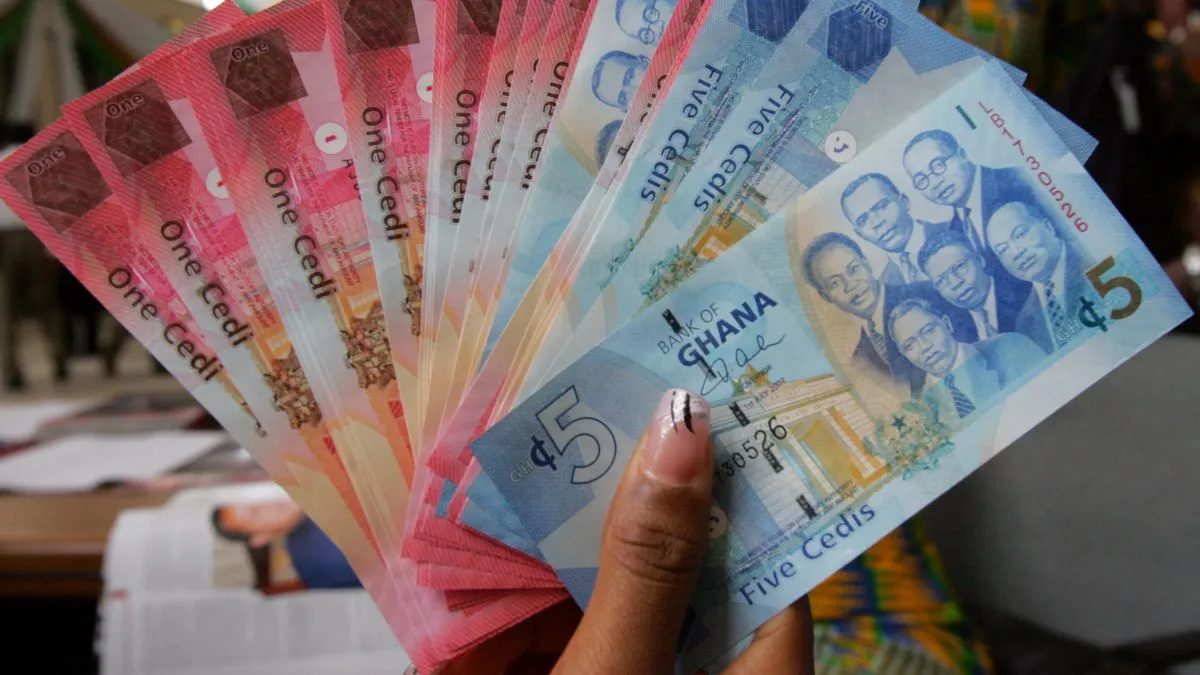
Ghana’s credit card penetration rate was forecast at 0.6% in 2024, with projections indicating it would continue to decline through 2029. With over 17 million Ghanaians already registered on the Ghana Card system, a successful rollout could produce one of the largest digital payment ecosystems on the continent.
Read also: Ghana achieved crypto clarity before Nigeria, but its “compliance war” has just begun
What this does to mobile money operators
This is where it gets competitive.
Ghana’s mobile money market is dominated by MTN Mobile Money, Vodafone Cash, and AirtelTigo Money. Each has spent years building the rails and the trust that lets people move money on their phones.
Yet, the Card wallet acts as a shared layer that financial institutions can plug into, rather than a system controlled by any single bank.
That structure puts it in direct competition with every mobile money operator in the country. Ghana is not a hostile actor here, at least not immediately. As a government-backed alternative with a distribution advantage no private company can match, every citizen who holds the card is already enrolled.
No acquisition cost. No signup friction. No brand-building required.
Mobile money operators will likely be pushed toward integration partners rather than primary wallet providers. That is a significant compression of their position in the value chain.
Furthermore, the NIA is also exploring a partnership with the Ghana Gold Board to use the card as a platform for gold trading and tokenised transactions, to create greater transparency and accountability in the sector, per GBC.
This is the most ambitious dimension of the whole project, and the least discussed.
Consequently, this is also a single-point-of-failure risk. A centralised national payment system built on one institution’s database is a high-value target. If the NIA’s systems go down, so do the wallets.
If the database is compromised, so are the payment records of everyone.

What regulatory recourse looks like
Ghana has the legal infrastructure to manage this, if it chooses to use it.
Financial analysts have noted that combining national ID with financial services raises data privacy concerns that will require strong safeguards, and that banks, fintechs and regulators must coordinate to ensure interoperability and consumer trust.
The Data Protection Act 2012 (Act 843) applies to the processing of personal data, including biometric information. The Data Protection Commission has enforcement authority under this law.
Specifically, regulators need to do three things:
- The Bank of Ghana needs to clarify its supervisory role over the Card wallet. The NIA is not a financial institution. It does not operate under BoG licencing. But it is now running what is functionally a payment system. That gap in oversight is a structural problem.
- The Data Protection Commission needs a published, audited framework for how the NIA stores, accesses, and shares the financial data generated through wallet transactions. Transaction history is personal data. It deserves the same protection as biometric records.
- The country’s parliament needs to revisit the NIA Act to determine whether an identification authority should be running a commercial payments business at all. Those two mandates will eventually pull in opposite directions.
What this means for the rest of Africa
Ghana is not the only country thinking this way.
If adoption succeeds, the country could be testing a model where the need for global card infrastructure providers such as Visa and Mastercard is significantly reduced, and identity-based systems emerge as a new foundation for payments across Africa.
That is a large claim, but it is grounded in precedent.
India built UPI, a government-backed account-to-account payments system, and it has progressively reduced the share of card transactions in the country’s retail payment mix.
Several African countries, including Benin and Djibouti, have also unveiled plans to introduce digital wallets tied to national identity systems to drive financial inclusion.
Nigeria’s NIN-linked financial architecture moves in a similar direction, with the CBN’s push to anchor all financial services to the national identity number. South Africa’s SARS is building a digital identity layer for every taxpayer.
The pattern is consistent. Across the continent, governments are recognising that the national identity database is the most powerful distribution infrastructure they control, and they are starting to build payment systems on top of it.
