

Fortuna Mining’s Diamba Sud Gold Project in Senegal has secured a 14MW captive power plant from Wärtsilä, marking another significant infrastructure commitment as the Canadian miner advances one of West Africa’s emerging gold developments towards a targeted first gold pour in 2028.
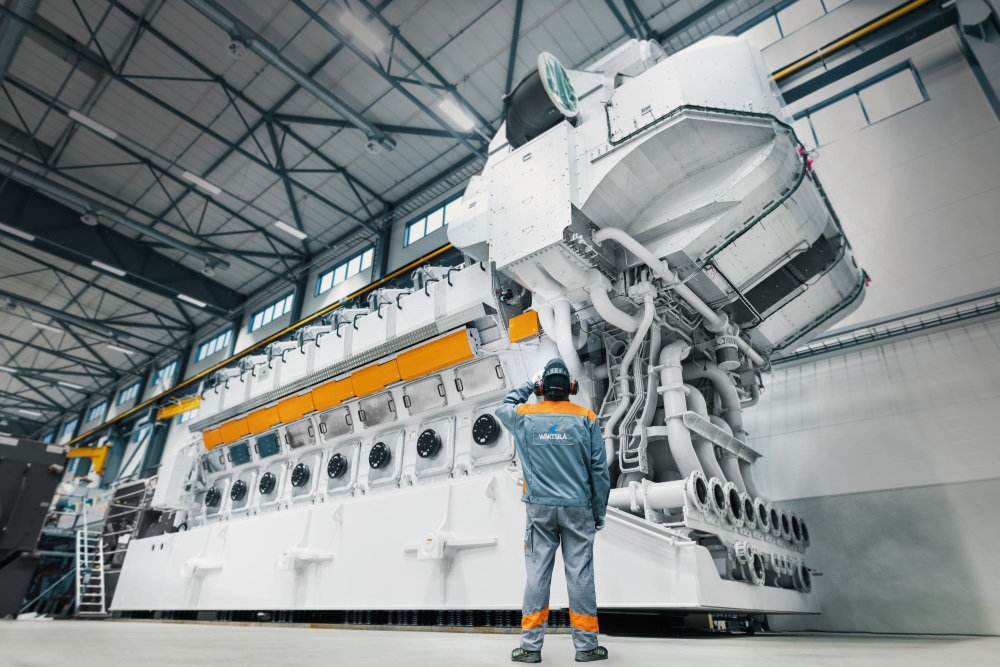
Technology group Wärtsilä will supply five Wärtsilä 32 engine generating sets for the project, which is located in a remote area of southeastern Senegal and will depend on its own power infrastructure for mining and processing operations.
The order was placed by Africa Power Services (APS), the engineering, procurement and construction contractor for the power plant, on behalf of Fortuna Mining. Wärtsilä booked the contract in its second-quarter 2026 order intake.
Equipment is scheduled for delivery in March 2027, with the power plant expected to become operational before the end of that year.
The contract comes as Fortuna moves Diamba Sud from feasibility studies and early works towards full-scale mine development, with the company targeting its first gold pour before the end of the second quarter of 2028.
Critical power infrastructure for an off-grid gold mine
Reliable electricity is particularly important for remote mining operations, where an interruption to power supply can affect processing, production schedules and operating costs.
Because of Diamba Sud’s location, the mine is expected to rely on the captive plant for its electricity requirements rather than depending on conventional grid supply.
According to Wärtsilä, using several smaller engine generating sets instead of a single large unit will enable the plant to adjust more closely to fluctuations in electricity demand. The configuration is also intended to provide the operational flexibility required to integrate intermittent renewable energy sources in the future.
Fortuna Mining has indicated that renewable generation could subsequently be introduced into the Diamba Sud microgrid.
Cedric Fernandez, Managing Director at Africa Power Services, said reliable power is essential for a remote mine because unscheduled downtime creates both operational and financial risks.
“Operating a remote, off-grid mine requires reliable power, as any unscheduled downtime carries financial and operational risks. Wärtsilä’s engines deliver the continuous performance required for such demanding conditions.”
Wärtsilä’s scope of supply also includes basic engineering, engine-specific auxiliary units and the engine control and monitoring system. The company will provide advisory support during installation and commissioning.
The power station represents more than an ancillary component of the development. Fortuna has identified power infrastructure among the critical packages required to maintain the Diamba Sud construction schedule.

Diamba Sud is a nearly $400 million gold development
The power contract forms part of a much larger investment programme at Diamba Sud.
Fortuna Mining’s June 2026 feasibility study estimated initial capital expenditure of approximately $398 million for the project.
The study envisages a conventional open-pit mining operation supplying a carbon-in-leach processing facility over an estimated 9.4-year mine life.
Based on the feasibility-study assumptions, Diamba Sud is expected to produce approximately 1.05 million ounces of gold during its operating life.
Average annual production is estimated at approximately 116,000 ounces, with production expected to be substantially higher during the early years of the mine. Fortuna forecasts average annual production of around 158,000 ounces during the first four years.
Probable mineral reserves were estimated at approximately 20.5 million tonnes grading 1.75 grams of gold per tonne, containing around 1.15 million ounces of gold.
Using an assumed gold price of $3,500 per ounce, Fortuna’s feasibility study calculated an after-tax net present value at a 5% discount rate of approximately $1.01 billion and an internal rate of return of about 60%.
These figures are project estimates rather than guaranteed future financial results. Actual performance will depend on factors including gold prices, construction execution, operating expenses, financing, regulatory approvals and geological conditions.
Early works are already advancing in Senegal
Fortuna has approved an approximately $73 million early-works programme for Diamba Sud as it works to reduce construction schedule risk and secure long-lead equipment.
Development activities have included work on access infrastructure, accommodation, offices and other facilities needed to support the construction and pre-production workforce.
The company has also been progressing procurement of key equipment and contracts required ahead of the main construction phase.
Diamba Sud received its Environmental and Social Impact Assessment Certificate of Conformity in June 2026, while Fortuna has also been advancing the exploitation-permit process.
The project timetable envisages construction progressing through 2027 and into 2028, with the first gold pour targeted before the end of the second quarter of 2028.
Renewables could be integrated into the mine’s microgrid
The Wärtsilä power plant also highlights a broader issue facing mining companies across Africa: how to provide dependable electricity to remote industrial operations while creating a pathway towards lower-carbon energy systems.
For Diamba Sud, the initial engine-based generating system is intended to provide continuous and dispatchable electricity. Its flexible configuration should allow additional renewable generation to be incorporated later without sacrificing the reliability required by a large mining operation.
Wärtsilä says its engines can respond rapidly to changes in load and therefore help balance variable generation from sources such as solar or wind.
Marc Thiriet, Energy Business Director for Africa at Wärtsilä Energy, said mining companies increasingly face pressure to maintain maximum operational availability while simultaneously preparing for decarbonisation.
“Mining operations are under dual pressure to maintain maximum uptime while actively charting a path toward decarbonisation.”
For Fortuna, the approach potentially creates a staged energy strategy: establish dependable captive generation first and then incorporate renewable capacity as the mine develops.
However, no final renewable capacity, investment value or timetable for the renewable component has yet been announced.
A strategic gold project in West Africa
Diamba Sud is located in Senegal’s Kédougou Region, approximately 665 kilometres southeast of Dakar and relatively close to the country’s borders with Mali and Guinea.
The project lies within the Kéniéba-Kédougou geological inlier, part of a major West African gold-producing region extending across eastern Senegal and western Mali.
Fortuna acquired Diamba Sud through its acquisition of Chesser Resources in 2023 and has subsequently accelerated exploration, technical studies and development planning.
The project has become one of the Canadian miner’s principal growth assets.
Fortuna currently operates mines and holds exploration and development assets across several jurisdictions, including Côte d’Ivoire, Guinea, Argentina, Peru, Guyana and Senegal.
Diamba Sud is expected to play an increasingly important role in the company’s production portfolio as it moves into operation.
Fortuna has previously indicated that development of Diamba Sud, alongside growth initiatives at its Séguéla operation in Côte d’Ivoire, could help lift the company’s annual gold production rate above 500,000 ounces by 2028.
Power procurement reduces a key development risk
Securing power-generation equipment more than a year before the targeted first gold pour reduces one of the major infrastructure risks associated with developing a remote mining operation.
Large generating systems and associated equipment can have long manufacturing and delivery schedules, making early procurement critical to keeping mine-development programmes on track.
For Diamba Sud, the Wärtsilä contract therefore represents another step in the transition from feasibility study to physical mine construction.
It also illustrates the scale of infrastructure investment required alongside mine development in parts of Africa where large industrial projects cannot assume sufficient grid capacity will be available.
Mining companies increasingly have to combine mineral development with investment in their own electricity, roads, water systems, communications and workforce infrastructure.
At the same time, energy design is becoming more closely linked to decarbonisation strategies, with hybrid power systems combining conventional generation, solar power, battery storage and other technologies becoming increasingly relevant to remote African mining operations.
Africa Power Services says it has installed more than 500MW of generating capacity in Africa, including 266MW of hybrid power plants incorporating photovoltaic generation and battery energy storage systems.
That experience could become increasingly important if Fortuna proceeds with the planned renewable component of the Diamba Sud microgrid.
Diamba Sud moves closer to production
The arrival of Wärtsilä’s generating equipment in 2027 will come during a critical phase of the Diamba Sud development schedule.
If Fortuna’s timetable is maintained, commissioning of the power facility will precede the targeted first gold production in 2028 and provide the mine with the energy infrastructure required for processing and other operations.
The project still faces the normal risks associated with developing a new mine, including construction execution, commodity prices, permitting and operating costs.
Nevertheless, the award of major infrastructure contracts indicates that Diamba Sud is moving beyond exploration and feasibility work towards the construction of an operating gold mine.
For Senegal, the development adds another substantial project to the country’s mining sector and reinforces the importance of the Kédougou region within the wider West African gold industry.
For Fortuna, securing the power plant provides a critical piece of infrastructure for one of the company’s most important growth projects — while retaining the possibility of integrating renewable generation as Diamba Sud moves from construction into long-term operation.
Sources and Information
Image credit: © Wärtsilä Corporation
