

Making up
US ambassador Leo Brent Bozell III says if former South African President Thabo Mbeki were involved in talks with the US, the recently escalated impasse between the two countries would already have been resolved. His statement isn’t likely to ease tensions.
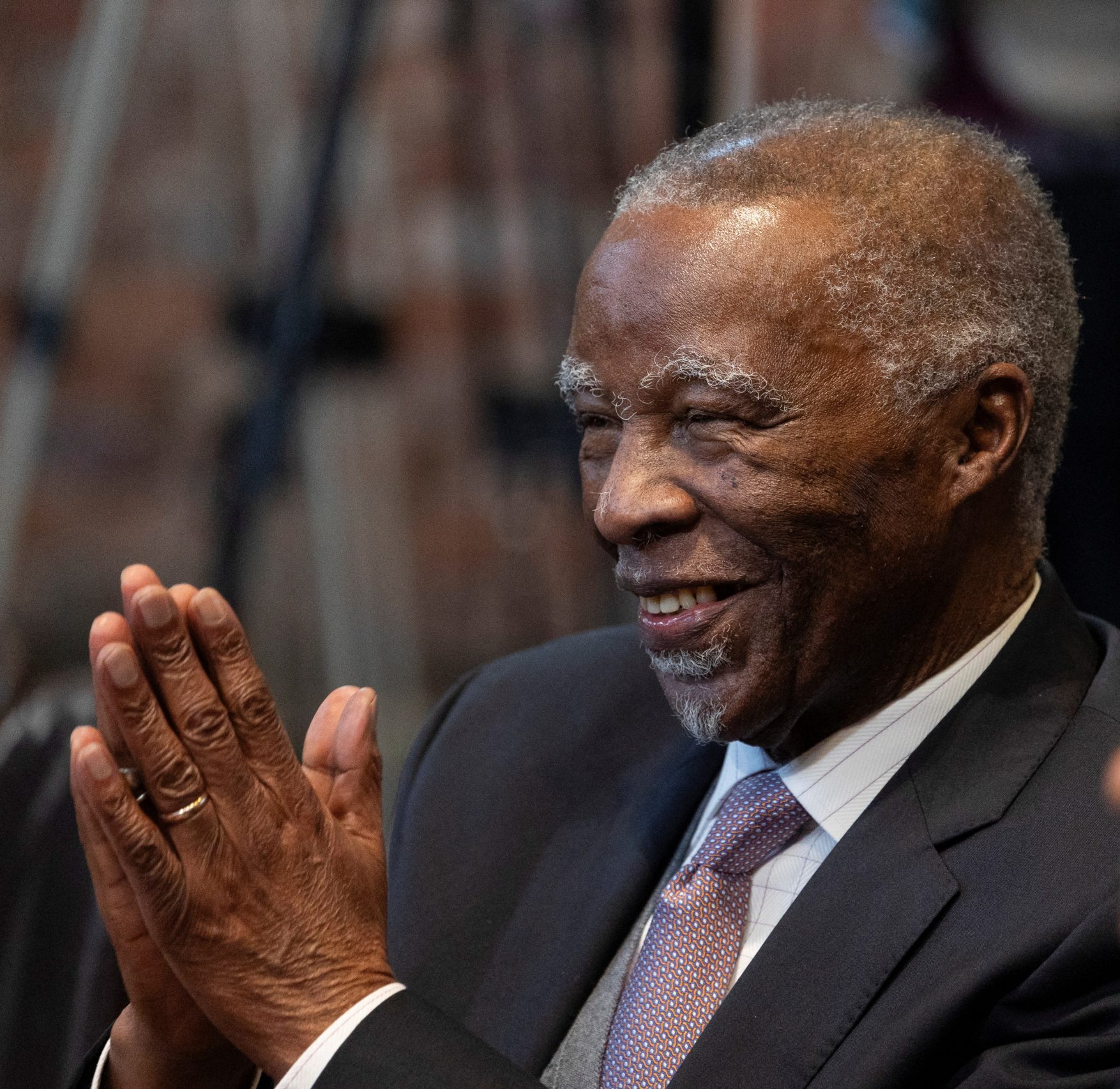
Former South African president Thabo Mbeki was praised this week by US ambassador Brent Bozell as an example of a political leader from the African National Congress (ANC) who could help remove the stumbling blocks in relations between the US and South Africa.
In an interview with local South African daily, Business Day, Bozell called Mbeki “..a man who’s very eloquent, who’s got an incredible record, who’s calling on a rapprochement between our nations.” Asked whether Mbeki, as a special envoy, could help the governments to find a resolution to the strained relations, Bozell answered: “No, I think we would already have found them.”
Bozell is giving a series of interviews to local media outlets days after the US announced visa restrictions on South Africans and their immediate families deemed complicit in uncompensated land seizures or threats, Broad-based Black Economic Empowerment (B-BBEE) legislation, or incitement of imminent violence or dehumanising rhetoric targeting minority racial groups [implying white people].
The first-time diplomat also told the publication that President Mbeki understands the mechanics of international diplomacy. “When you are dealing with fundamental economic frameworks and trying to move past impasse into actionable agreements, you need someone who commands immense respect in both capitals,” he added.
SA government ‘not helpful’
Just before bringing Mbeki’s name into the conversation, Bozell accused the South African government of “not being helpful” in resolving some of the issues the Trump administration has with the country, including special dispensations to mining and telecom that would exempt them from the South African government’s Broad-based Black Economic Empowerment (B-BBEE) policy, which has strict criteria related to black ownership of a business.
“America is not challenging B-BBEE. It is not challenging it,” he said, in a rare clarification of the US view. “It asks for the exemptions to B-BBEE.” The US has argued that exemptions would open the way for US businesses to invest in the sector more easily.
Mbeki is known for mediation work that he’s done on the African continent, and has continued with it after he was forced out of office by former president Jacob Zuma’s supporters in 2008. But Bozell’s mention of Mbeki as the person who could best help resolve the impasse with the US could spark more tensions with President Cyril Ramaphosa’s government.
Ramaphosa and Mbeki have in the recent past had vocal disagreements about issues such as how a national dialogue over socio-economic and political issues should take place.
Instilling fear?
“This is classic divide and rule tactics,” says international relations expert Oscar van Heerden, from the Centre for African Diplomacy and Leadership. He tells The Africa Report the US is aware of the acrimony between Ramaphosa and Mbeki. “They want to suggest that Mbeki is a better international relations diplomat. As for Bozell, he is simply playing games and wants to somehow instill fear in us. There will be more punitive actions coming our way,” he predicts.
While Mbeki’s foundations have no special relationship with the US embassy, it is understood that Mbeki frequently engages with ambassadors and diplomats on international matters. He unusually accepted an invitation to speak at the US’s 250th Independence Day celebrations in Pretoria at the start of July.
Mbeki praised the US Congress for adopting the Comprehensive Anti-Apartheid Act in 1986, despite a presidential veto. He said this made the US “one of the architects of our country’s liberation from apartheid and racial discrimination”.
Apartheid revived
In contrast, international relations minister Ronald Lamola this week in Washington DC, told the African Diaspora Forum that Trump’s “refugee” programme for white people from South Africa was “Apartheid 2.0”. Trump has falsely claimed that white people in South Africa are subject to a genocide, and he ambushed Ramaphosa during a visit to the White House in May last year, when Ramaphosa attempted to dispel the false claims.
