

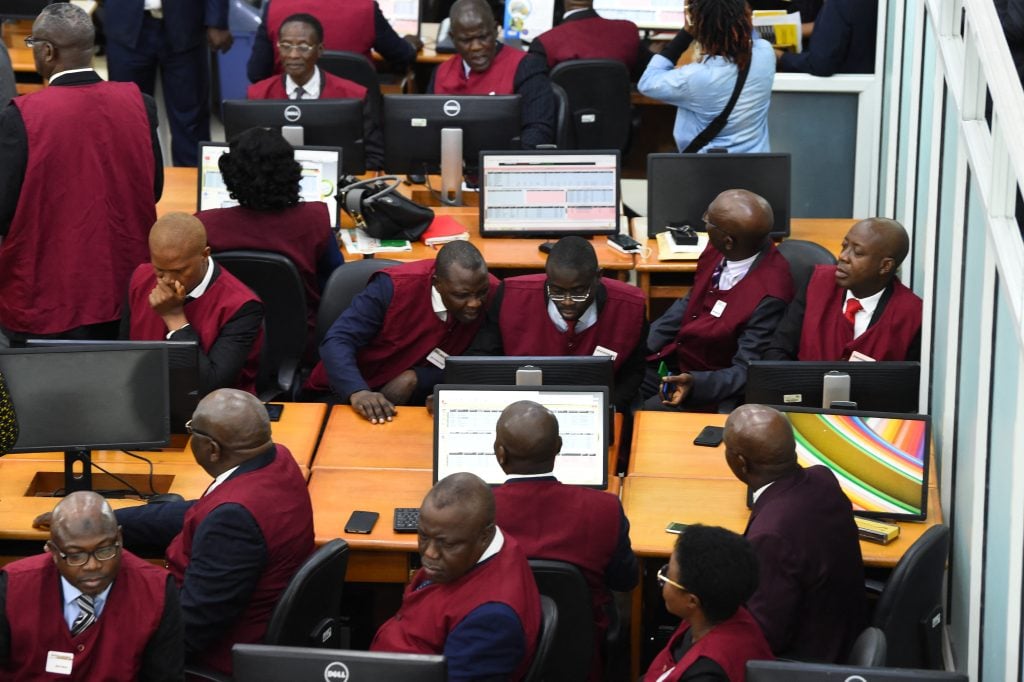
Nigerian tech founders are being deterred from listing on the local stock exchange because they do not understand how the listing process works, according to a report from Lagos-based law firm TLP Advisory.
The report finds that 53% of founders say they are not sufficiently aware of how the Nigerian Stock Exchange (NGX) listing process works. Only 21% would consider a listing at all – with many preferring to list abroad – and 46% would prefer to exit their investment via an acquisition.
“While some view NGX listing as theoretically viable, they lack clarity on practical requirements, timelines, or pathways to get there. NGX’s limited engagement with the startup ecosystem deepens this challenge. None of the founders interviewed reported direct NGX outreach, educational sessions, or proactive communication about listing opportunities,” the report found.
The report says “the awareness gap” between startups, investors, and the exchange needs to be fixed through “consistent outreach and engagement, such as roadshows, workshops, playbooks, and advisory support.”
“Educate founders on listing benefits and processes while equipping advisers and investors to engage more effectively with venture-backed companies,” the report advises.
Are founders ready for greater scrutiny?
But other experts warn that founders must be prepared for increased scrutiny if they are to consider listing.
“Before advising the NGX, I would advise the startups and investors on how to build trust,” says Kayode Odeleye, managing partner at 23mile, which invests in distressed venture-backed startups.
“The first thing is to stop the approach of “fake it till you make it.” Investors need to be more transparent, drive transparency with their startups, and ensure their financial reports mean something. They need to be disciplined and ready to face scrutiny very early on.”
Odeleye said that skewed valuations for Nigerian startups make listings unrealistic.
“First is the global problem of a valuation mismatch. Over the 10-year period when there was a lot of capital, we saw startups raise money at ridiculous valuations. Startups with next to no revenue in naira were being valued at $50m by VC investors who focused only on selling to the next person. The challenge locally and globally is that valuation mismatch where a startup valued at $50m at the last round could be worth only one-tenth or one-fifth of that if they tried to list. Listing at $10m after raising at a $50m valuation wipes out existing investors.”
Startups point to currency issues
More than two-thirds of the startups surveyed said that “currency and foreign exchange mismatches” were the main reason preventing them from listing on the NGX, which is denominated in the local naira currency.
This is because most startups backed by international investors have the US dollar as their accounting currency and therefore also need to list in the same currency. The recent instability of the naira – which has lost more than 65% of its value since being freely floated back in 2023 – means that listing in the local currency gives rise to exchange rate risks.
The report recommends strengthening local capital sources to reduce dollar dependence and exposure to exchange rate risks.
The TLP report notes that “early-stage venture investors deploying dollars expect dollar denominator exists to avoid devaluation risks. When 76.5% of Nigeria-funded startups hold dollar capital, exchange rate instability makes listing an exercise in foreign exchange risk management.”
The relatively limited liquidity of the NGX – which has a market capitalisation of around $62bn compared to the $28.3tn market capitalisation of the New York Stock Exchange (NYSE) – is also a concern for founders.
“The NGX could also explore dual or cross-listing partnerships with exchanges like NASDAQ, AIM, and JSE to attract foreign liquidity while maintaining a local presence,” the report states.
26% of founders told TLP that market frictions such as compliance costs and potential undervaluations were a key concern, with a further 16% explicitly highlighting the exchange’s liquidity as a deterrent factor.
