

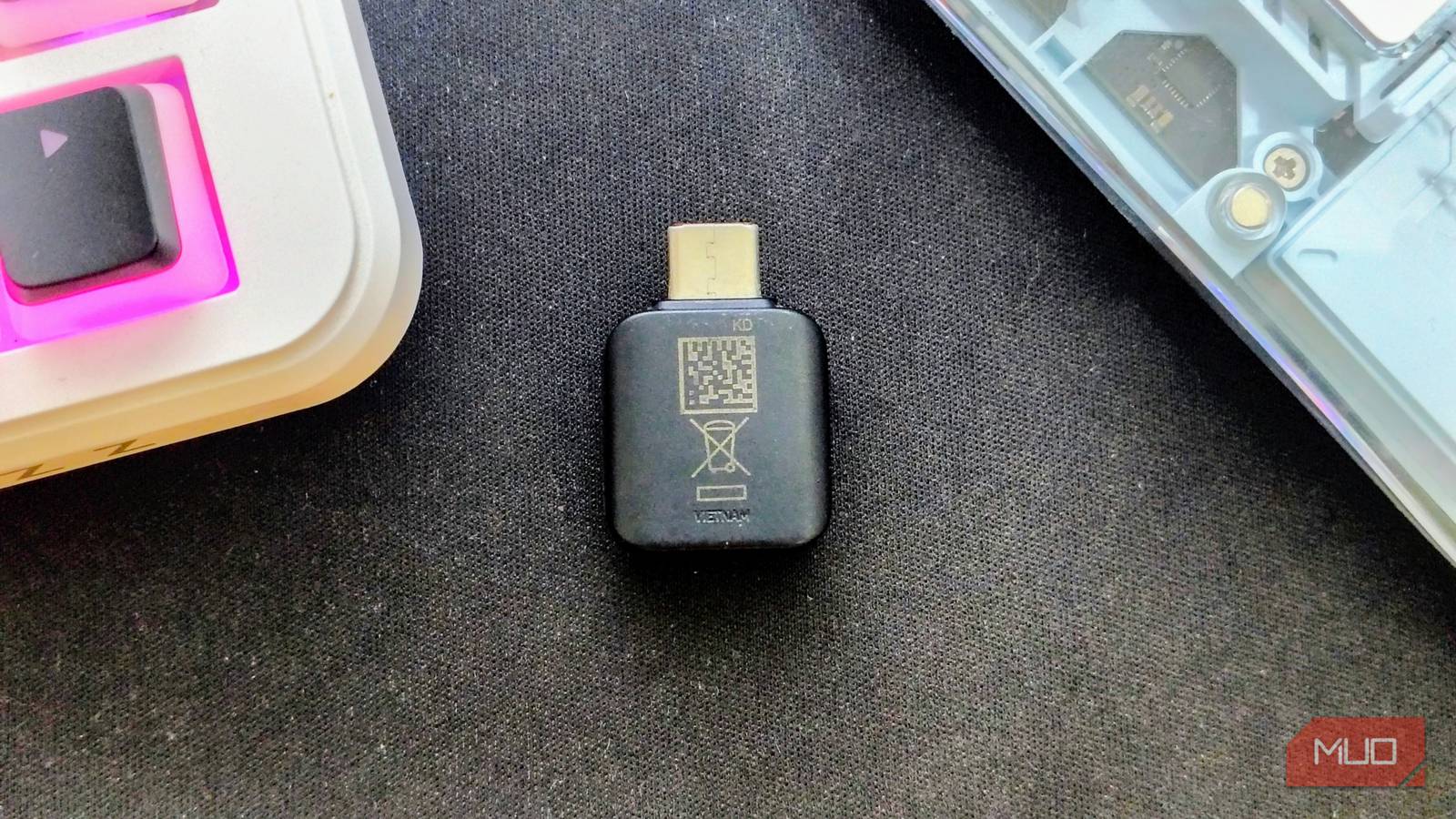
We are currently transitioning through a sort of dongle purgatory. While the industry aggressively pushes toward a USB-C-only era, we believe in the philosophy of “one cable to rule them all.” But the real world is still attached to the past. And that’s the only reason why, despite owning top-rated docking stations, I still feel the need to carry around a tiny yet important Type-A to Type-C adapter and keep old cables around.
Carrying this dongle isn’t by choice, though. It’s necessary in a mixed-media environment. And since day one, I’ve been carrying this tiny dongle; it has proven itself useful more often than not. Whether you are looking for the best laptop accessories or the right tools to carry, a USB-A-to-USB-C dongle is a must-have.
Why this tiny dongle is important
It links the gap between legacy and modernity

Global Growth Insights research says that almost 70% of new phones and laptops use USB-C. Still, there are billions of older devices out there. Many of these work just fine, but don’t have a Type-C port. If you don’t make room for them, you end up limiting what you can do.
Think about the devices you use every day. Many people still rely on a favorite mechanical keyboard, an older webcam that works better than built-in ones, or a dependable wireless mouse with a 2.4GHz receiver. Most of these use USB-A. Without an adapter, your new laptop can’t connect to your favorite tools.
The benefit of the single-port adapter depends on its universal compatibility. It unifies your ecosystem, turning an iPad, an Android, a Windows laptop, or a MacBook into a host for almost anything. Basically, if your device has a Type-C port, you can connect any legacy peripherals with a Type-A port with this simple, tiny adapter.
Unlocking superpowers
It’s a lot more than just a bridge to new and old
OTG allows your mobile device to switch roles from peripheral to host; you can plug all sorts of things into your phone’s USB port. But the most transformative application of this is in mobile gaming. Touch controls are often imprecise and frustrating.
By using this adapter to plug a wired Xbox or PlayStation controller — or even a low-latency dedicated gaming mouse — into your Android phone or iPad, you eliminate input lag. You gain console-quality precision on a portable screen, turning a long flight or a train ride into a legitimate gaming session.

I Went All-In on USB-C and It Changed My Life
Life becomes so simple once you’ve made the switch to USB-C.
As a result, productivity also sees a noticeable boost. With an OTG adapter, you can plug a compact portable keyboard or even a mechanical keyboard directly to your phone. With larger screens thanks to better screen-to-body ratios, drafting longer emails or jotting down a quick document on the go gets easier.
The input is instant, and you can jot down complete documents in a coffee shop without ever opening a laptop. For photographers, plugging a card reader directly into a phone for immediate edits in Lightroom Mobile changes the workflow entirely, removing the laptop from the equation.
It’s not a replacement
You still need those USB hubs

You might feel that if you still need to carry the USB hubs, why carry one more dongle? And that is correct, the hub has an HDMI port, pass-through charging, SD card slot, and more. But you are forgetting the point of nuance of friction and ergonomics.
USB hubs work well for stationary desk setups, but they are clumsy for mobile EDC. These hubs are often heavy, feature dangling cables that put stress on your device’s ports, and are annoying to set up just for a 30-second-long task.
A tiny, thumb-sized dongle essentially becomes part of your peripheral. You can even leave it attached to your wireless mouse receiver or your favorite flash drive. It also fits in the coin pocket of your jeans or in a small slot of your wallet. On the other hand, the USB hub requires its own carrying case.

These USB-C accessories make working from coffee shops actually viable
Improve your productivity and make life easier with these must-have USB-C accessories for remote work.
There’s also a factor of loss. High-quality hubs are expensive; if you lose one, it’s going to put a huge dent in your pocket. On the other hand, adapters are cheap; you can get five good-quality ones for the price of one cheapest USB hub.
You can buy a pack of five and stash them everywhere — one in your laptop sleeve, one in your car, one on your keychain, and one in your desk drawer. This backup plan ensures you are never caught unprepared.
Give this tiny tool a space in your EDC
With so many devices focused on extra features, a simple Type-A-to-Type-C adapter stands out for being minimal. You hardly notice it until you need it, but then it’s the most important tool you have.
If you use your phone for work or fun, keep one of these dongles in your everyday carry. It’s a small investment that doesn’t seem important until you need it. Then, it gives you peace of mind and keeps you ready for anything.
