

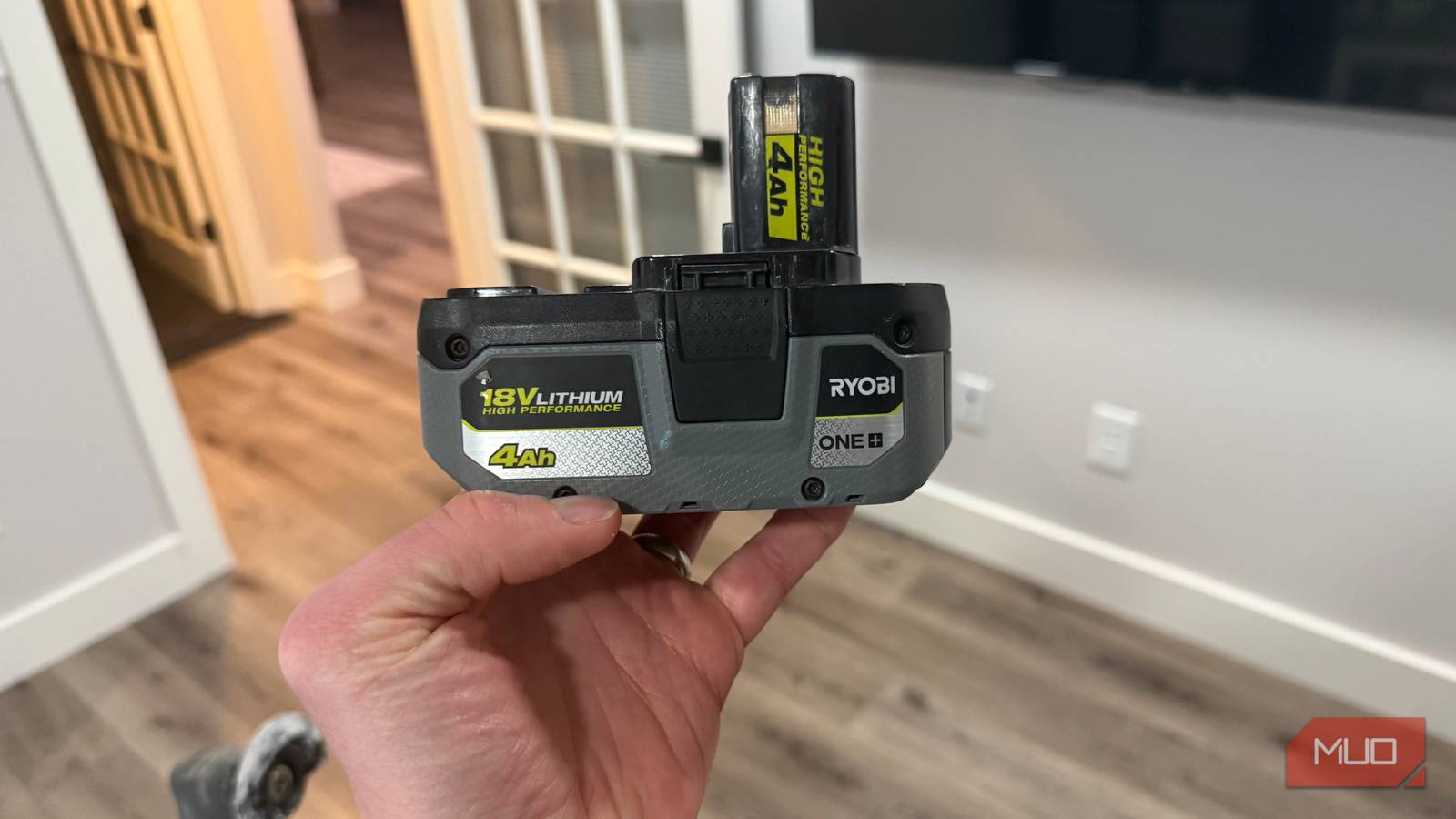
Power tool batteries aren’t cheap. A single Ryobi ONE+ 4Ah pack runs around $60–$80, and if you’re building out a full Ryobi ONE+ collection, those costs stack up fast. Most people assume heavy use is what kills batteries early. It isn’t. After years of expanding my own cordless tool setup, I started noticing certain packs fading well before others — and the pattern had nothing to do with how hard I was running them. It came down to three habits that nobody explains when you buy your first cordless drill. None of them are complicated, and fixing them costs nothing.
The real reason your batteries die early
It’s not the workload — it’s the chemistry
Two things quietly destroy lithium-ion batteries: voltage stress and temperature. Cycle count plays a role, but it’s not the main event. What actually matters is how much time a battery spends near the extremes — almost dead or topped off at 100%. Cells under that kind of sustained stress lose capacity faster than cells doing the same amount of work but handled better. That’s the thread running through everything below.
Stop storing batteries at full charge
The 40–60% rule most people ignore
This one changed things more than anything else I tried. When I finish a project, and the battery won’t get touched for a few weeks — I don’t shelve it fully charged anymore. I run it down partway first.
Keeping lithium-ion cells at full charge puts them under constant voltage stress, even when the tool is just sitting there. Researchers call this calendar aging — capacity loss that happens on the shelf, not from use. Battery research has found the annual capacity loss at full storage charge can reach 20%, versus under 5% for packs stored in the 40–60% range. A few seasons of that gap add up to real degradation.
The same logic applies at the other end. A battery left fully depleted long enough can slip into a deep discharge state, where the battery management system locks the pack out completely. I found this out with a battery I forgot about in a drawer over winter — it wouldn’t respond to the charger when I dug it out months later.
For tools I grab regularly, none of this requires tracking anything. The batteries cycle through use often enough that storage charge isn’t a concern. It’s the stretches of low activity where it matters — late fall when outdoor projects wind down, the middle of winter, any stretch where I know most of my tools are going to sit for a month or more.
That includes tools like my cordless heat gun that see heavy seasonal use but go largely untouched the rest of the year. That’s when I make a point to check what’s on the shelf and run any fully charged packs down to roughly half before putting them away. Two bars on a four-bar indicator is close enough.
Your garage is silently damaging your batteries
The problem isn’t the cold — it’s charging in it
Storing tools in the garage is fine. Where it gets costly is walking out on a cold morning, pulling a battery off the shelf, and plugging it straight into the charger without letting it come up to temperature first.
Cold storage doesn’t hurt lithium-ion batteries. Cold charging does. When a battery charges below 32°F, lithium ions can’t integrate into the anode properly — they plate onto the surface as metallic lithium instead, and is a permanent degradation. One cold charge cycle can trigger it, and warming the battery up afterward doesn’t undo it. The result is reduced capacity, higher internal resistance, and a greater risk of a short circuit.
High heat does its own damage. Garages in summer can hit 110°F or above, and extended exposure at those temperatures breaks down cell chemistry over time. The safe range for lithium-ion storage is roughly 50–77°F.
Before plugging in a battery that’s been out in a cold garage, bring it inside and give it an hour or two to reach room temperature. That’s the whole fix. Permanent storage indoors isn’t necessary — just don’t charge a pack that’s still cold from a January morning in an unheated space.
Pull the battery off the charger when it’s done
Treating the charger like a storage dock adds up over time

Modern Ryobi chargers cut off current when a battery hits 100% — there’s no danger of acute overcharging with a quality, matched charger. But many chargers follow that cutoff with a low-level trickle charge to maintain full capacity as the battery self-discharges. That trickle current keeps cells in a state of high voltage stress and generates low-level heat. Any single overnight charge is no big deal. Months of parking batteries on the charger indefinitely is a different story.
I used to treat my charger station as a battery dock — tools would come in from the garage, get plugged in, and stay there until I needed them. It felt organized. What it was doing was keeping every pack topped off at 100% around the clock, right where lithium-ion cells age the fastest.
The chargers for my underrated Ryobi tools have indicator lights for exactly this reason — green means done, and done means unplug. Over the life of a battery pack that might cost $70 to replace, a five-second habit is worth developing.
Small changes, long battery life
Store packs at partial charge when they’ll sit unused for a few weeks. Let cold batteries warm up indoors before putting them on the charger. Once a pack hits full on the charger, take it off. Use these three habits; each takes just a few seconds. Replacing a degraded $70–$100 battery pack is a real cost — and every one of the habits that prevents it is free.
