

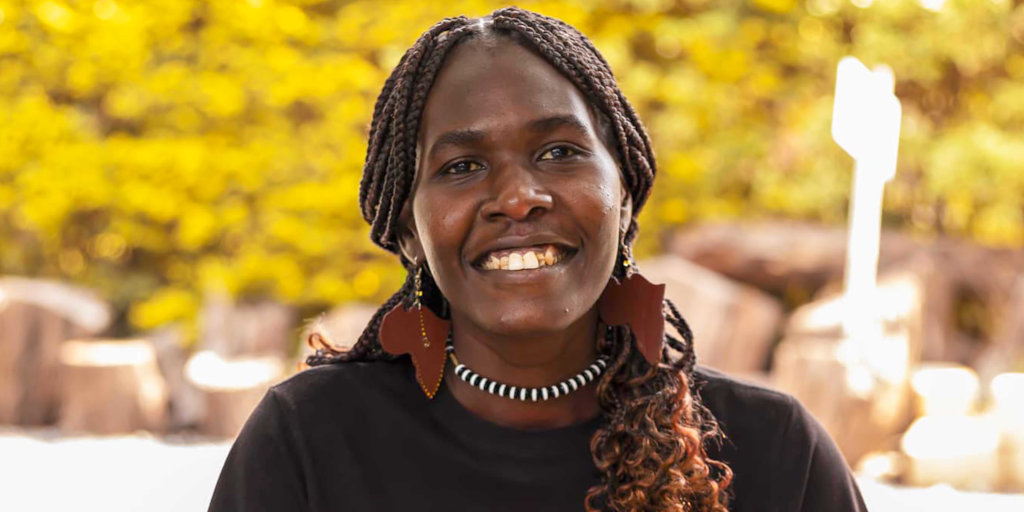
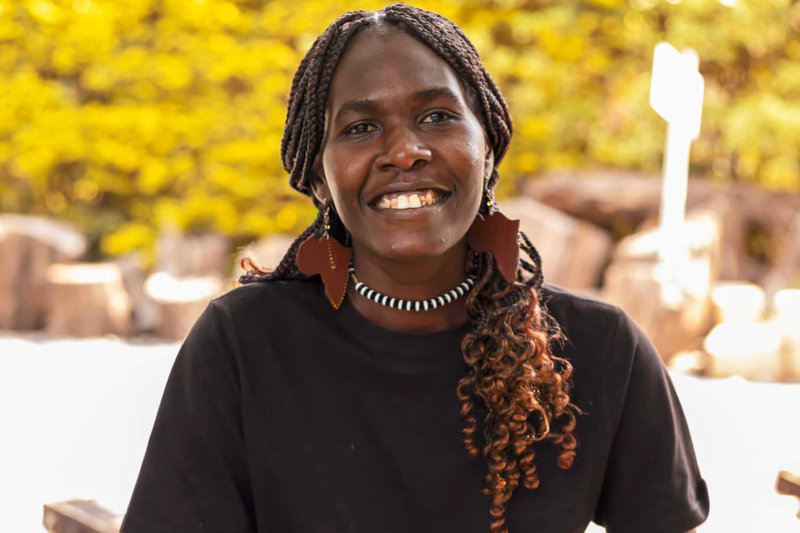
Khadmalla Abo Abass Ali
Interview with Khadmalla Abo Abass Ali
Lives in: Nairobi, Kenya
By Yasir Faiz, bird story agency
Khadmalla Abo Abass Ali arrived in Nairobi as a refugee from Sudan and now runs a café that serves as a gathering place for the Sudanese diaspora.
In April 2023, Khadmalla Abo Abass Ali, a Sudanese single mother, faced a difficult choice: remain in Khartoum, where she earned a living selling tea on the streets as conflict erupted, or seek a safer place to raise her daughter.
She chose the latter. Rather than risk being caught up in the violence that swept across Sudan, Ali relocated to Nairobi, Kenya. Once there, she quickly had to find a way to earn a living.
Fate had brought her there in an unexpected way. A team of Sudanese filmmakers, working on a documentary titled Khartoum, had chosen her to appear in the film. She traveled to Nairobi with her daughter to participate in the shoot, intending to stay only for a few weeks. But as the conflict in Sudan deepened, returning home became difficult and complicated. The war dragged on, famine spread, and economic collapse left millions stranded in uncertainty.
Nairobi, with its cosmopolitan energy, was overwhelming at first. Ali spoke some English but no Swahili. She had no savings to pay rent or even cover basic needs.
“After I left Sudan for a safe place,” she says. “I felt that the real war had just begun. What happened to me left layers of pain I could now clearly see. I thought about returning to Sudan, because I didn’t know how to start a life here or what to do.”
Her turning point came during Ramadan. A young Sudanese man convinced her to stay a little longer and suggested they organise evening tea and coffee gatherings for the Sudanese community in Nairobi.
“Since I couldn’t afford rent, I made an agreement with the mall owner to work from six in the evening, when other shops were closed. That’s how I started serving coffee, tea and conversation.”
Coffee and tea are important in Sudanese social life. Soon, her small corner became more than a stall. It transformed into a communal meeting point for Sudanese refugees to talk.
“Everyone talked about the war, because we had all come from it,” she says.
Over time, she saved enough money to rent a small corner from Sudanese shop owners in the same mall. That tiny space, anchored by her wooden tea box, became her first real business. The beginning, however, was far from easy. She lived alone with her daughter, waking at five every morning to prepare the girl for school before heading to work. By late afternoon, she would rush home to meet her daughter’s school bus, prepare her meal, and bring her back to the café for the evening shift.
“After a while, I managed to save enough to bring my sister to Nairobi to help. We became two adults sharing the load,” she says.
Her persistence paid off. Within a year, Ali was able to rent her own small independent shop.
Sudanese journalist Hatim Al-Kinani, one of Ali’s regular visitors, describes her café as “a gathering place for Sudanese youth from different backgrounds, a space where they can talk about their personal and collective concerns.”
Her café, located in Nairobi’s Kilimani district, has grown into a kind of cultural landmark. The smell of coffee and ginger fills the air as Sudanese songs play softly in the background. On weekends and holidays, the space buzzes with activity.
“In Sudan, especially during the holidays, people visit each other constantly,” she said. “I don’t want to lose that.”
Every Eid, she organises communal gatherings and sometimes hosts small film screenings.
Her story of resilience caught international attention through the same film that first brought her to Nairobi. Khartoum, the documentary in which she appeared, has since screened at major festivals, including Sundance and the Berlin International Film Festival. Its success introduced audiences around the world to her courage, and opened new doors for her café’s cultural activities.
In a city that once felt foreign and unwelcoming, Ali has created a home, not just for herself and her daughter, but for an entire community searching for belonging.
/bird story agency
