

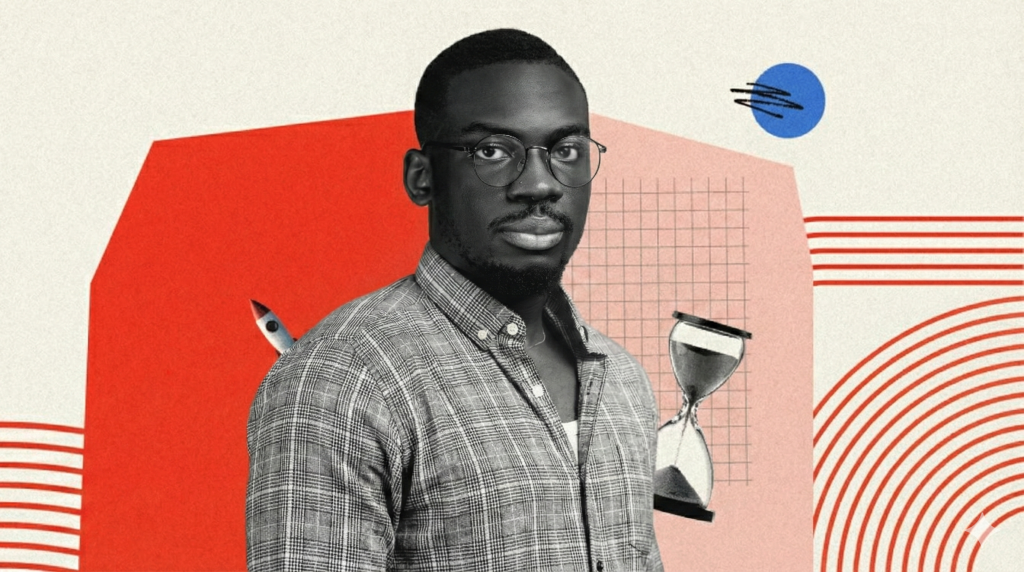
In 2025, Selar, an e-commerce startup that helps creators sell products, paid out over ₦18 billion ($12.8 million) to its African users. While the numbers might look good in isolation, the added context that this came within a decade of the startup’s launch and is almost double 2024’s ₦9 billion ($6.6 million) in payouts shows how far the bootstrapped startup has come.
Like many African startups, reaching these milestones was far from straightforward. Douglas Kendyson, the company’s founder and CEO, told TechCabal that when he launched the business, he had no fixed blueprint for what it would become. Instead, constant user feedback shaped the startup’s direction and evolution.
“When I started Selar in 2016, I did not have a grand thesis about the market. I didn’t sit down and write out, “Creators will do X, and customers will do Y, and therefore we’ll win,” he said.
“The best thing about those early days was that I was not boxed in by what I thought the market “should” be. I was just building something I wanted to exist and then improving it based on what people told me,” he added.
The first 100 days: “Wait, users, don’t just show up?”
Selar’s first customer did not come from Nigeria. They came from France. The very first user Kendyson set up was his friend after he released an extended playlist (EP) of songs, and after a little convincing from Kennedy, he listed it on Selar.
“Guy, come. Put it on Selar. Let people support you,” Kendyson told his friend.
At the time, the logic was that people would have listened to his music anyway, but with Selar, they could back him financially.
“That was the first ‘sale’ strategy I understood. People don’t just want to consume; they want to support,” Kendyson said.
But after successfully bringing in his friend, reality hit fast.
“Where are the rest of the people? Who is going to bring them?” he thought to himself within the first 100 days of Selar.
At the start, all Selar employees were engineers. While they were good at shipping products, nobody was responsible for distribution. Nobody owned growth. According to Kennedy, one of the first brutal lessons in the first 100 days was that sales and marketing are not vibes.
“People do not just come because you built something,” he said.
He tried everything he could. He turned other friends into customers. He built a community. But by the third year, the problem was still there despite Kendyson’s efforts at building and doing outreach, hoping people would find Selar.
“I cared about users, but my default setting was to keep refining, keep improving, and keep shipping. Then surely everything will click. That’s a very engineer-like way to think,” Kendyson said.
Cheap hires and expensive lessons
Selar’s first hires were cheap, but they taught Kendyson an expensive lesson. In early 2020, he hired two social media employees to post content for Selar and paid them ₦20,000 ($52) each. He thought that with two junior people, things would improve, and they would figure it out.
Then in January 2021, he hired his first engineer, a junior developer, largely to keep costs down. He assumed that because he could write code himself, managing and supervising the hire would be straightforward. He quickly learned otherwise.
Before the year ran out, Kendyson had learnt the real price of hiring juniors too early. “When you hire too junior across key roles, you pay with your time,” he said.
He spent too much time iterating, reviewing, rewriting, and giving feedback. “It becomes a loop. You save money, but you lose weeks. And your time is not free, especially as a founder.”
He knew he had to find a balance. Even though it was difficult, he increased his budget and fired the junior employees.
“The alternative was me drowning in oversight,” Kendyson said.
The rebirth of Selar started in Dubai
Kennedy attributed one of the biggest shifts for Selar to a job that had nothing to do with the startup. In 2018, he moved to Dubai and worked as a growth and software engineer at Sarwa, a fintech company, where he worked closely with the marketing team.
Watching how marketing actually works when people take it seriously and how positioning, distribution, partnerships, and repetition compound changed how he built his startup. By 2020, he left the company to apply what he learnt from his time in Dubai.
He describes that period as the rebirth of Selar because it was when things began to feel real: “We were finally learning how to move beyond ‘we built something’ to ‘people are actually using it,” he said.
One of the main ways Selar tried to solve the customer problem was through social media and cold outreach. At first, Kendyson was messaging people he knew personally. Expectedly, he could not find scale using this method and realised that if he wanted strangers to find him, he needed a distribution method that scaled.
“We leaned into cold DMs, more consistent social content, and eventually accepted that ads might be necessary,” he said.
The early milestones
The milestones Kendyson cared about most in the beginning were revenue milestones. Only cold, hard cash could impress him, and the same still runs true today.
The first big milestone was ₦100 million ($74,000) in sales in 2020. While he was happy, he was also in disbelief.
Then the next obsession became ₦1 billion ($740,000). Even as Selar hit these milestones, Kennedy could not calm down.
“They gave me the most anxiety I’ve ever felt because digital products can be inconsistent,” he said.
A creator could have an impressive launch this month, but their sales plummet by next month. This unpredictability seeped into Selar’s business model and affected the startup’s revenue strength.
“So even as we grew, I kept thinking. Can I repeat this? Is this sustainable? Are there enough creators? Are there enough launches?”
From 2020 to 2024, he carried ‘insane’ anxiety. The more successful Selar got, the more his fear rose because now there was something to lose.
To diversify the startup’s business model, Selar added subscriptions. The business model still revolves around transaction fees, but by the end of 2020, the startup introduced subscriptions, offering a pro plan with advanced features.
“It was initially ₦8,000 ($6), and now it’s ₦12,000 ($8.9). It became a meaningful and steady revenue line for the company,” Kendyson said.
The “secret” is product and distribution, over and over
People often ask Kennedy what the secret is to Selar’s success. He attributes it to being obsessive about the product and distribution.
“The product should do what it says it will do. Every year, we keep iterating, tightening, refining—making sure Selar actually solves the problem creators came to us for.”
The next step after building the right product is to show up where people already are.
“We do a lot of partnerships and collaborations because if you’re not trying to spend recklessly, partnerships become a smart way to stay in people’s faces without burning cash like a furnace.”
That’s the secret to the machine behind Selar. Build, improve, distribute, collaborate and repeat.
