

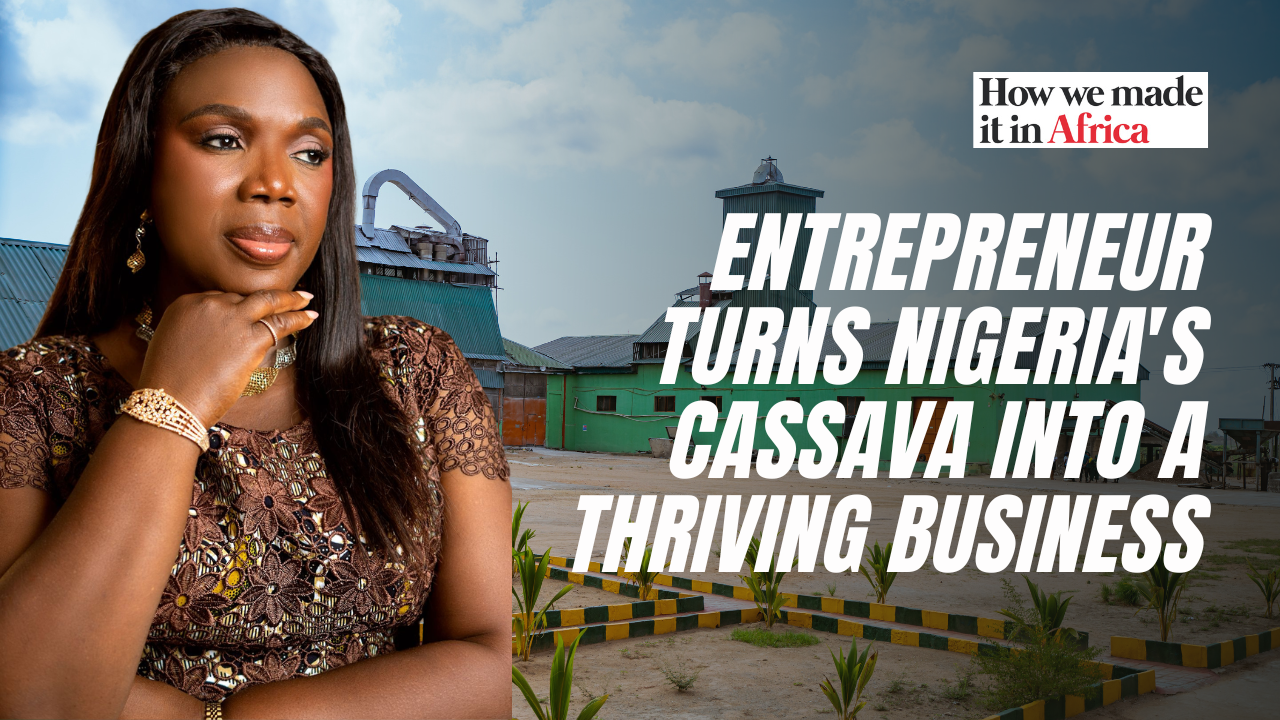

Yemisi Iranloye
Our new book, How we made it in Africa II: Real stories of entrepreneurs turning opportunity into profit, is available here.
Interview with Yemisi Iranloye
FOUNDER and CEO, PSALTRY INTERNATIONAL
Lives in: Nigeria
Cassava is a root crop that resembles a large sweet potato. Nigeria produces and consumes more of it than any other country. Most often, it is processed into garri or fufu, which are eaten as thick, dough-like accompaniments used to scoop up traditional soups and stews.
However, cassava also has major industrial applications. The roots can be processed into starch, ethanol, glucose syrup and flour. Among its many uses, food companies rely on the starch as a binder to hold ingredients together, and it is also a key component in corrugated cardboard boxes. Additionally, because the crop is naturally gluten-free, cassava flour serves as an alternative to wheat flour, creating opportunities in the health and wellness market.
Nigerian entrepreneur Yemisi Iranloye recognised this industrial potential. At 40, she quit formal employment to focus full-time on her cassava processing venture, Psaltry International. Her very first client for the starch was food giant Nestlé in Nigeria.
Jaco Maritz, editor-in-chief of How we made it in Africa, spoke to Iranloye about how she built her business.
Topics discussed during the interview include:
- Cassava’s industrial potential
- Transitioning from employment to entrepreneurship
- Key entrepreneurship lessons learned
- Nigeria’s untapped agribusiness opportunities
- The importance of delayed gratification
Watch the full interview below:
Our new book, How we made it in Africa II: Real stories of entrepreneurs turning opportunity into profit, is available here.
Yemisi Iranloye earned a food biochemistry degree from the Federal University of Technology Minna in 1997. She completed her master’s in biochemistry and nutrition at the University of Ibadan in 2000.
A year later, she joined Ekha Agro Processing in Lagos, a company that converted cassava into glucose syrup.
In 2005, while still working at Ekha Agro, she bought her first piece of land in Oyo State. Unable to afford the full price upfront, she paid for the property in instalments over three years.
Farming began as a weekend hobby. Her initial goal was stem multiplication: growing better varieties of cassava. She shared these superior stems with neighbouring small-scale farmers to help increase their crop yields.
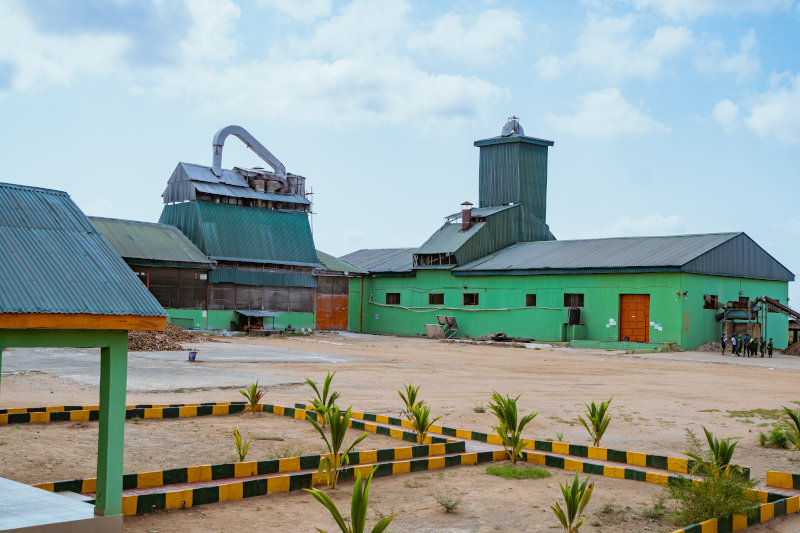
Psaltry International’s factory
Going all in
In 2011, at the age of 40, Iranloye quit her job to run her cassava venture full-time. She built a small house on the farm, moved there with a handful of staff, and began sourcing cassava from an initial group of 17 small-scale farmers.
She secured a loan to fund her first factory. It was a 20-tonne-per-day cassava starch facility, built with equipment imported from China.
Nigeria already had some cassava starch processors. Iranloye’s edge was her location. Cassava spoils rapidly after harvest. By building her factory directly next to small-scale farmers, she processed the crop faster and achieved a much higher quality.
In 2013, Nestlé took samples of the initial batch of cassava starch and became Psaltry’s first customer. From there, other clients like Unilever, Nigerian Breweries, and Promasidor also came on board.
A second factory followed in 2015. With it, the company began producing cassava flour.
Next came a sorbitol plant in 2022. Sorbitol is a natural sweetener used in toothpaste and other oral care products. Familiar with Psaltry’s consistent starch output, Unilever approached the company to produce sorbitol. According to Iranloye, most manufacturers previously imported sorbitol from Asia.
Over the years, Psaltry has expanded its supplier base to include 16,000 small-scale farmers.
Early challenges
Psaltry’s early challenges stemmed directly from the site’s location. “The factory was in the middle of nowhere,” Iranloye says.
Lacking basic infrastructure, the company had to construct its own access road. Electricity was non-existent in the rural area, forcing Psaltry to bring in its own generators. Later, the company was able to obtain electricity from the national grid.
Water was another problem. The only water source was a small stream that disappeared during the dry months. To cope with the shortage, the company built boreholes – first for the community in 2011, and then for the factory itself.

Cassava is a root crop that resembles a large sweet potato.
Growing competition
When Iranloye began producing cassava starch, there were few competitors. However, today, she notes there are at least 20 other manufacturers in Nigeria.
Alongside this increased supply, demand for locally produced cassava ingredients has also surged. “Especially with the forex issues Nigeria went through in the last five years, more companies are seeing the reason why they should buy local,” the CEO says, referencing the naira’s recent depreciation.
Other promising crops
Beyond cassava, Iranloye sees major business opportunities in sweet potatoes and coconuts.
Sweet potatoes, she says, have a high starch content and are naturally gluten-free, making them ideal for industrial applications.
Coconuts are another promising crop. Aside from providing high-quality cooking oil, almost every part of the coconut has commercial value. “There’s practically no part of coconuts that cannot give money,” Iranloye explains.
Lessons learned
Looking back on her entrepreneurship journey, Iranloye says passion is a requirement. “I don’t know if anyone can survive in the agri space without having a passion for it … Because that’s what helps you when things are not going well.”
She also stresses the importance of deferred gratification. Entrepreneurs shouldn’t take too much money from a company before it matures, nor should they treat business revenue as personal income. “You are separate from the business; you are a totally different entity from the business,” Iranloye says. “If you ever want to see the business of your dream, then you must defer gratification today so that the business grows into the business of your dream.”
Persistence is equally key. “Even if you don’t know what you are doing, just keep at it,” Iranloye says. She notes that when she started, she didn’t have a clear idea of what the business would be, but as she went along, things started to reveal themselves.
