

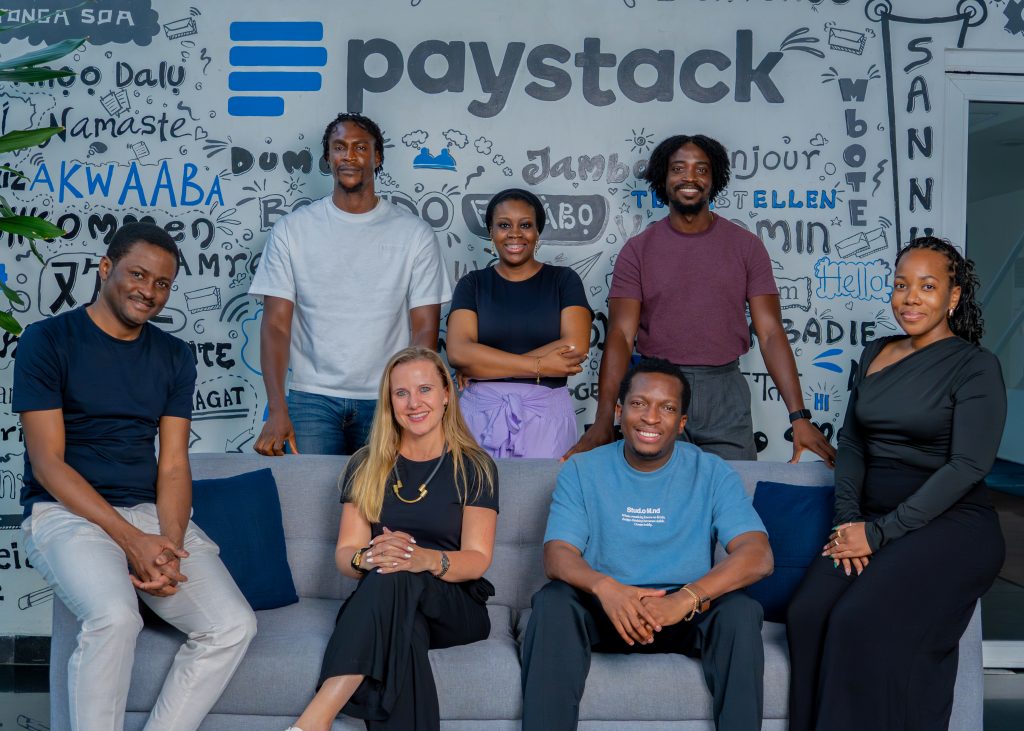
In October 2020, Stripe agreed to buy Paystack, a Lagos startup that helped businesses take payments online, for $200 million, the largest acquisition of a Nigerian startup. At the time, Paystack had 60,000 customers.
Stripe said the deal would fund new products and help pull Africa’s scattered payments market together and that Paystack would keep running on its own. Shola Akinlade, its chief executive, promised more countries, more payment channels and more services.
Six years after the acquisition, he has fulfilled that promise. In 2020, Paystack made money by taking a cut each time a business collected payment online, a model that needs scale. It charges 1.5% plus ₦100 per transaction, capped at ₦2,000, so a ₦10,000 order earns it ₦250, about 19 cents.
This model earns income only when money moves; unlike a bank that holds customers’ money, it can lend or invest it at a higher rate than it pays for it, and that income keeps coming for as long as the balances stay, with or without transactions.
Brazil’s Nubank shows how well this works. It ended 2025 with $41.9 billion in deposits, paid 87% of the interbank rate to fund itself, and made $2.9 billion. Worldwide, interest made up 46% of payments revenue in 2024, according to McKinsey.
Six years on, the company Stripe bought has changed shape. It now owns a microfinance bank and a consumer app. Its path shows why African fintechs keep becoming banks and how hard the last step is.
Paystack first became bigger and more exposed
Paystack spent Stripe’s backing on reach, now serving businesses in Côte d’Ivoire, Ghana, Kenya, Nigeria, and South Africa, with approvals in Egypt and Rwanda, and it hired wherever the talent was, including an engineering hub in Dubai.
With time, reach brought more volume and costs in dollars against income in weak African currencies. By November 2023, the naira had lost more than half its value since June that year, and the Kenyan shilling had fallen almost 20% in twelve months. What Paystack earned moving money fell sharply in dollar terms even as it grew in local currencies.
In response, Paystack laid off 33 employees in Europe and the UAE.
That same year, bank transfers accounted for 34% of the company’s payments in Nigeria, its biggest market, up from 12% in 2021. Paystack added a pay-with-transfer payment method in 2020, and that growth showed customers began preferring transfers because they were cheap and reliable.
It followed the money.
By 2023, it launched Virtual Terminal, which gives a shop a Paystack-Titan bank account for customers to transfer into. This introduced large sums in accounts carrying Paystack’s name, but the interest on those balances went to Titan Trust Bank.

Brass shows Paystack the value of deposits
In May 2024, Paystack led a group that bought Brass, a business banking startup. Brass had struggled to pay out withdrawals since October 2023, and two people said it had a ₦2 billion ($1.5 million) hole in its books. The buyers stepped in because they feared a collapse would send customers running from other fintechs.
It was Paystack’s first known stake in a business that held other people’s money. While it would eventually get Brass’s business customers, it also saw what happens when deposits run short.
Ten months later, in March 2025, Paystack launched Zap, its first consumer app, with deposits held at Titan.
By the end of April, the Central Bank of Nigeria had fined Paystack ₦250 million. A person with knowledge of the matter said the regulator found Zap was being run as a wallet, which Paystack’s licence did not cover.
Paystack only held a payments licence, which lets a company move money between other people’s accounts. Holding that money, even briefly in a balance a customer can spend from later, requires a different licence. Zap looked like a wallet, while Paystack had permission for payments.
Paystack had already decided to hold customers’ money. The fine showed it could not do so on a payments licence in the way Zap first worked. Zap later won regulatory approval, and in January 2026 Paystack bought a bank.
Paystack turns into a group
In January 2026, Paystack bought Ladder Microfinance Bank and said Paystack MFB would lend to businesses first, then to individuals. Days later, it created a holding company, The Stack Group. Paystack said its payment volume had grown more than twelvefold since 2020, and the group was profitable.
In June, Brass said it would close as a standalone business and move its customers into Paystack MFB. In August, Allawee, a card company Paystack bought quietly in 2025, told customers their accounts would close on 1 December and that they must open new ones with Paystack.
The microfinance licence lets Paystack take deposits, lend, and earn interest, so it depends less on fees.
Compared with incumbents like Moniepoint, which says it serves more than 6 million active businesses in person, Paystack starts with a deficit. OPay and PalmPay built the same way, through agent networks that put a physical point of contact in markets, shops and streets across Nigeria. An agent signs up a trader, handles their cash, and becomes the reason that trader keeps a balance with a fintech instead of a bank.
Paystack has no comparable footprint. Its strength was always online checkout, where a business integrates once, and the relationship runs entirely online. Its card machine never matched the agency banking networks, so the daily, in-person habit that turns a payments customer into a depositor was never built.
That is why Paystack MFB has to win deposits one account at a time and why it bought Brass and Allawee. Each acquisition brings business accounts that already exist, which is faster than recruiting them.
In 2020, Stripe bought a company that moved money quickly. Paystack’s next test is how much of that money it can persuade to stay.
