

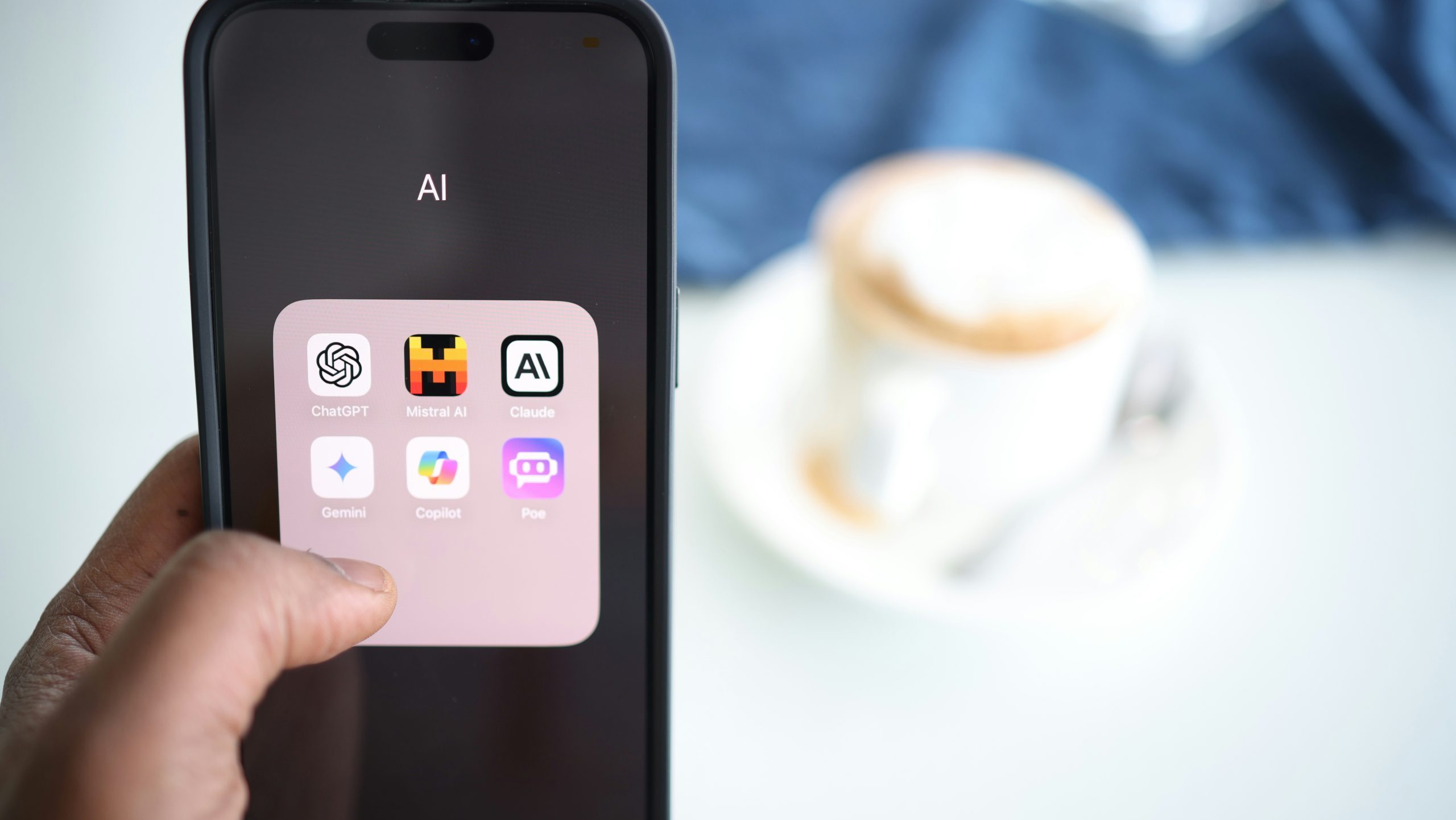
In 2025, Nigerians used AI for far more than drafting emails or summarising PDFs. Chatbots became makeshift therapists, romantic intermediaries, and personal consultants.
As we wrap up the year, one thing is clear: while much of the world was worried about AI taking over jobs, Nigerians were teaching chatbots to navigate the treacherous waters of the “talking stage” and the fallout of heartbreak.
I spoke with seven Nigerians about the most ridiculous things they used AI for this year. Here’s what they told me.
The automated heartbreak recovery and emotional auditing
AI chatbots became a mirror for Lagos-based UI designer Obaloluwa Olaniyi’s fractured relationship, serving as a forensic tool to dissect past traumas.
“I used it to go through a heartbreak,” Olaniyi says, adding that AI helped run scenarios to identify “behaviours I was blind to see and [provided] advice on how to heal [without] repeating the same mistakes.”
This trend of emotional auditing wasn’t just for the post-mortem phase of a breakup. Mark*, a content editor, used AI as a moral compass during conflicts with his partner, relying on the technology for “soundboarding my relationship messages for empathy check.”
To avoid being labelled a manipulator, Mark used AI as a check, ensuring his messages didn’t come off as offensive to his partner.
Victor Ilo, a public relations consultant, admitted to using AI for “therapy to heal from a relationship,” proving that, for many Nigerians, a prompt was more accessible, less intimidating (and maybe less expensive) than a traditional therapist’s couch.
The pivot toward digital intimacy is not localised but reflects a massive global shift in mental health care. The “AI-as-therapist” phenomenon ballooned into a multi-billion-dollar industry in 2025, with millions of users globally opting for the non-judgmental ear of a machine over human practitioners. In high-income countries, including the UK, the trend was driven by the prohibitive cost of private sessions, while in emerging markets, it was the sheer anonymity that appealed most. Digital companion apps and specialised therapy bots became the first line of defence for a generation grappling with loneliness, offering 24/7 availability that no human clinic could match.
The most vulnerable conversations of a significant portion of the global population are now happening in a chat bubble. A 2025 study by Kantar, an AI-native marketing data and analytics business, which surveyed over 10,000 consumers across ten global markets, including South Africa, India, and the UK, revealed that 54% of global consumers have now used AI for at least one emotional or mental well-being purpose.
Navigating the delicate art of the breakup
For many people, AI has become a strategic consultant for the most awkward social transition known to man: the death of the talking stage.
Ending a “talking stage” has always been a social minefield, particularly when the other person is genuinely kind. Product marketer Iyanu Hunye found herself in this exact predicament with a partner she described as a “nice guy and a softie.” Rather than ghosting or sending a blunt text, she outsourced the emotional labour to AI.
“I wanted to break things up in a way that doesn’t invalidate his feelings,” she says.
Using AI as a buffer for social awkwardness highlights a shift in how people communicate. People now use machines to ensure they remain humanely empathetic, even when we are checking out of a situation.
For Chioma Nwandiko, a product designer, AI serves as a lie detector, asking it to “analyse a text” specifically to check for “any underlying manipulation,” effectively turning her smartphone into a digital shield against “red flags” in her interaction with people.
The suburban shaman for retail and aesthetics
Away from the drama of the heart, AI found a home in the mundane but essential tasks of personal grooming and consumerism.
Nwandiko’s usage patterns suggest that AI has become the ultimate “bestie” for shopping and styling. She used the technology to “colour-code my hair if I want to mix extensions,” turning a complex visual task into a data-driven decision.
AI was a highly specialised personal assistant for Nwandiko in 2025. She says she also took photos of two competing products to ask AI which was superior, and asked a bot to track down “random episodes of series I like when I want to binge watch.”
Academic shortcuts and the simulation of corporate excellence
Of course, the professional and academic spaces were not left out. David Idam, an IT support specialist, took a group work to its logical automated conclusion by “writing a full term paper for my whole group using Claude,” a move that likely saved dozens of hours of collaborative friction.
Idam’s AI use mirrors a nationwide explosion in AI adoption. In Nigeria, Google Search data from late 2025 revealed that searches for “AI + studying” surged by over 200% compared to the previous year, with interest in “AI + Chemistry” and “AI + Maths” leading the charge.
Nigerian students are using AI for academic tasks, ranging from simplifying complex jargon to generating complete project drafts. This has raised concerns in the academic community, evidenced by a 290% increase in searches for “AI detection” by worried lecturers. As a result, Nigerian universities like UNILAG made moves earlier in the year to draft formal “Ethical AI” policies as faculty reported a sharp rise in plagiarism.
In the professional world, the desire to project high-level competence led Tope*, a corporate communications officer, to transform a chatbot into an elite advisor. He used AI to “act as a MBB management consultant, used to describe the three top-tier strategy consulting firms: McKinsey & Company, Bain & Company, and Boston Consulting Group. Tope used AI to deliver a “detailed project management plan for a website revamp project.”
AI use in the workforce and corporate space has had quite the impact: A World Economic Forum report shows that while AI has automated 30% of routine corporate tasks, it has also created 1.6 million unfilled AI positions globally.
Cultural pivot
Nigerians were busy operationalising AI in 2025 to solve the immediate and somewhat messy problems of life. This is a cultural pivot where chatbots have become a primary intermediary for our most intimate and professional vulnerabilities.
However, as we move into 2026, the stakes are rising. The same tools helping a student write a term paper are contributing to a gap that the labour market is only just beginning to quantify. We are witnessing the birth of a new social trend, one where we are no longer just users of technology, but orchestrators of a digital consciousness that mirrors us.
If anything, Nigerians have mastered the art of the prompt to survive the chaotic, beautiful, and often confusing realities of modern love and life.
