

Right now, I’m working from the driver’s seat of my car, using a setup that feels perfect for remote work. I use an M2 MacBook Air for when I need efficiency and long battery life, and sub in a Lenovo Yoga Book 9i with a dual-screen form factor for peak productivity. Theoretically, I’ve built out my car with the right gadgets to help me work from anywhere. There’s just one thing missing — none of the laptops I own offer cellular connectivity. As good as they are, they’re dependent on having a good Wi-Fi network nearby.
So, despite these laptops being perfect on paper for a digital nomad, I’m forced to play the game of mobile hotspot tethering whenever I want to work off the grid. In peak conditions, I get just under 200Mbps of internet speed with my mobile hotspot, until my “unlimited” data plan decides to slow down to 128Kbps. It brings me back to the same question I ask myself every year: why aren’t there more 5G laptops? We’ve agreed that smartphones, tablets, and even smartwatches benefit from nonstop cellular connectivity. The same is true of laptops, and I’ll keep holding out hope that this year is finally the one when 5G laptops become mainstream.
Cellular is essential for working away from home
No, your phone or tablet’s LTE connection won’t cut it
The best thing about devices with standalone cellular connections is that they just work. If I leave the house, my phone disconnects from my Gigabit Wi-Fi 6E home network and automatically starts using 5G or LTE cellular data, whichever is available. The same is true of my smartwatch and tablet. When I head out for a run without my phone in my pocket, I can use LTE to stream music, send texts, and make calls. My tablet turns into a digital nomad’s dream when I start using cellular data in areas where Wi-Fi networks are unavailable. You get the idea — native cellular connections are automatic, fast, and private.
That last point is worth emphasizing, especially for businesses and employees using laptops out in the field for work. We’ve all been warned about the dangers of using free public Wi-Fi networks and the need to use a virtual private network (VPN) for added privacy and security. Even as a tech reporter, I can admit that Starbucks free Wi-Fi network on your laptop’s Wi-Fi panel is just so enticing. Rather than fiddle with VPNs or trust public Wi-Fi networks, wouldn’t it be easier to just use a secure 5G connection on your laptop?

My iPad has cellular data and I don’t pay extra for it — here’s the trick
This hack isn’t perfect, but it saves me $25 on my phone bill each month.
By now, you’re probably wondering why I can’t just use my phone’s mobile hotspot. It’s a fair question to ask, but there are clear reasons why your phone or tablet won’t cut it as an alternative to a 5G laptop. Even if you have an unlimited data plan, there’s probably a clause in the fine print that says your speeds will be aggressively throttled when you use too much mobile hotspot data. For my particular plan, using more than 5GB of hotspot data in a month will result in future hotspot speeds of 128Kbps. That’s extremely slow, and amounts to an unusable browsing experience.
Maybe your phone plan is more generous than mine. Either way, mobile hotspot data racks up fast, and it’s almost always slower than a direct 5G or LTE connection. Think about it like Ethernet versus Wi-Fi — would you rather use Wi-Fi to connect to your router, or a wired Ethernet connection? The answer is ideally the latter. Mobile hotspots come with similar disadvantages. Your phone is connecting to a cell tower and relaying the bandwidth to your laptop, resulting in slower speeds, extra latency, and less bandwidth than if you had used a direct connection.
Why I need to see more 5G laptops
It’s a harmless add-on to offer that meets modern trends
Cellular laptops are necessary now due to shifting trends, both in technology and the world in general. Following the pandemic, many industries realized that employees could work from anywhere. Meanwhile, advances in laptop technology mean that a device like my M2 MacBook Air can meet all my computing needs in a portable form factor with all-day battery life. For plenty of workflows, a desktop workstation is simply unnecessary. To date, the idea of working from anywhere usually comes with an asterisk. You can work from anywhere — as long as anywhere has a Wi-Fi network.
The movement towards web-based apps and workflows is another reason why 5G laptops are a greater need today than they were a decade ago. In the past, people primarily worked on offline applications that didn’t require constant Wi-Fi connections. The situation couldn’t be more different today. Everyone is using online and cloud-based apps in some way or another. That could be in the form of centralized cloud hubs like Google Drive or Microsoft 365, communication platforms like Slack or Microsoft Teams, or another web app, like the content management system I’m typing in right now.
Laptops are more powerful in 2026 than anyone could’ve expected. The Lenovo Yoga Book 9i pictured in the gallery above has dual 13.3-inch screens, and it allows me to work from a coffee shop, hotel room, or basically anywhere else without sacrificing productivity. The only thing it needs to be perfect is a 5G or LTE cellular connection.
Unfortunately, this laptop model doesn’t offer it, but I’d love to see it as an option. There are so many novelty options available on laptops these days — think something like Apple’s nano-texture display finish — that it couldn’t hurt for companies to sell a Wi-Fi + 5G model of popular laptops as a modern alternative.
Are there any good 5G laptops available now?
Yes, but they’re ridiculously hard to find

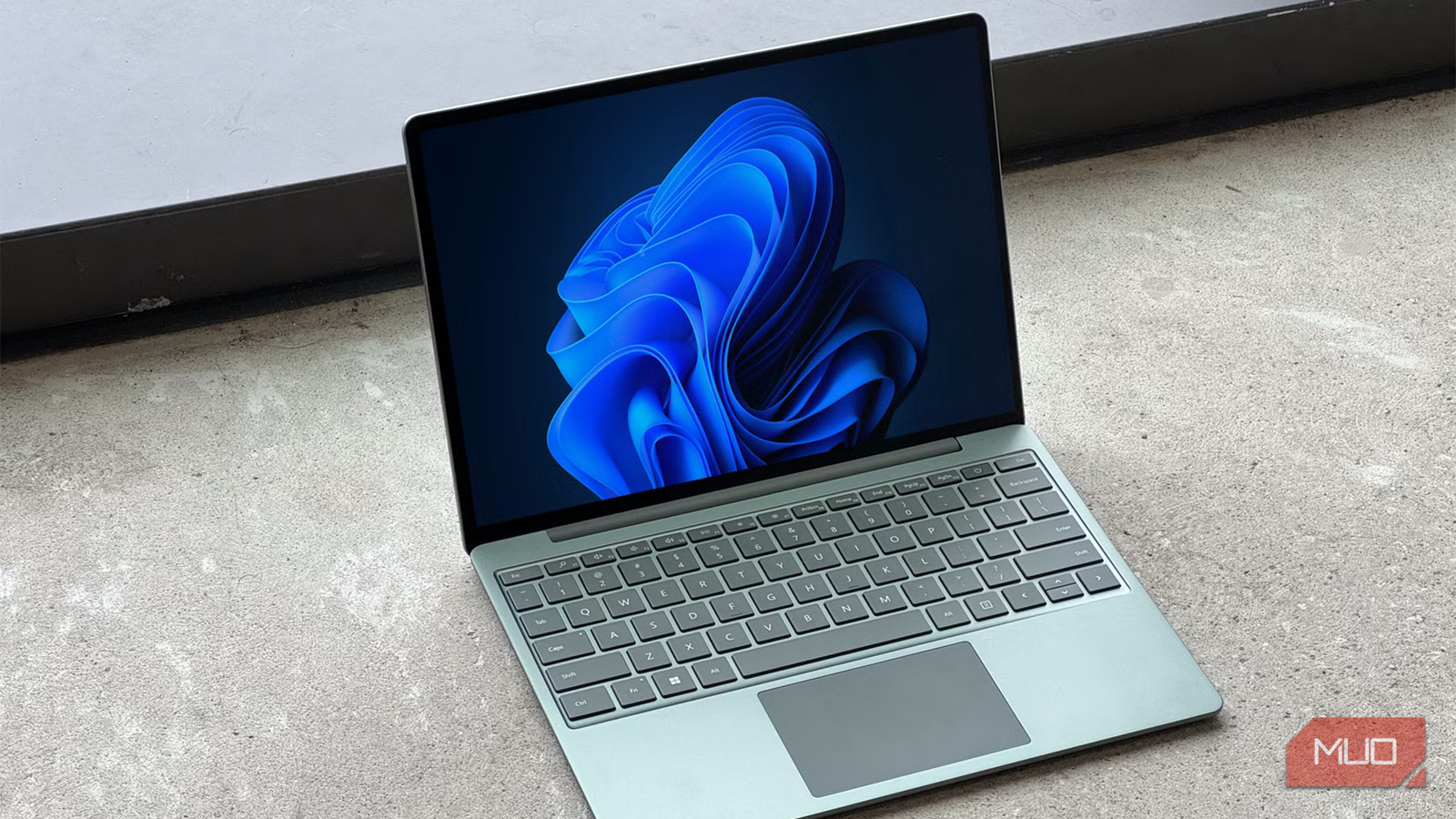
Laptops are still the most common computing device people use to get work done. That’s why it’s shocking to me that while cellular has made its way to watches, tablets, and even AI pins, laptops with 5G or LTE connectivity are relatively uncommon. They’re almost exclusively available in the business world. Top options include the Lenovo ThinkPad X1 Carbon, the Microsoft Surface Laptop 5G, and the HP EliteBook 6 G1q. They do exist, but good luck finding them in a big box retailer.
That should change in 2026. It’s great that Microsoft’s Surface Pro 11 and Apple’s M5 iPad Pro both offer 5G, but some of us want to see cellular connectivity on our laptops, too.
