

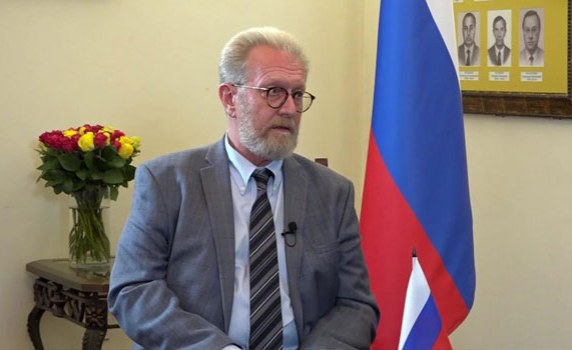
Nairobi — Russia has blamed Kenya for stalled labour migration and security cooperation talks amid the controversy over the recruitment of Kenyans to fighin tht e Russia-Ukraine war.
In a statement issued Thursday, the Russian Embassy in Nairobi suggested that delays in finalizing bilateral agreements may have contributed to concerns raised by Kenyan authorities.
“The Embassy remains open for a constructive and depoliticized dialogue with the government authorities of the Republic of Kenya aimed both at resolving legitimate concerns of the Kenyan side, as well as at development and formalization of mutually beneficial cooperation,” the statement read.
“Their soonest finalization would be of great benefit in establishing a proper framework for Russia-Kenya collaboration on this and other matters.”
Keep up with the latest headlines on WhatsApp | LinkedIn
The mission dismissed allegations that it or its staff facilitated the recruitment of Kenyan nationals into the Russian military, describing the claims as part of a “dangerous and misleading propaganda campaign.”
It also denied processing visas or assisting Kenyans seeking to travel to Russia to participate in what Moscow calls the “Special Military Operation” in Ukraine.
Free to enlist
However, the Embassy acknowledged that under Russian law, foreign nationals legally present in Russia may voluntarily enlist in the Russian Armed Forces if they choose to do so.
The statement follows explosive findings presented in the National Assembly by Majority Leader Kimani Ichung’wah, citing investigations by the National Intelligence Service (NIS) and the Directorate of Criminal Investigations (DCI).
According to the report, investigators uncovered an extensive network of collusion involving rogue officials that facilitated the recruitment and trafficking of Kenyans to fight in the Russia-Ukraine war.
Ichung’wah told Parliament that certain officials within the Directorate of Immigration Services, the DCI, and the National Employment Authority allegedly enabled recruits to travel undetected through airports.
The report also implicated personnel at diplomatic missions, including the Russian Embassy in Nairobi and Kenya’s Embassy in Moscow, in the alleged issuance of visas and facilitation of travel documents — claims the Russian mission has categorically denied.
“The ongoing Russia-Ukraine war continues to trigger the recruitment of foreign fighters by the Russian military through rogue recruitment agencies and individuals in Kenya,” Ichung’wah said.
Investigators estimate that over 1,000 Kenyans may have been recruited, many reportedly enticed by monthly salaries of up to Sh350,000, bonuses of up to Sh1.2 million, and prospects of foreign citizenship.

Sign up for free AllAfrica Newsletters
Get the latest in African news delivered straight to your inbox
Some were allegedly deployed to military camps after as little as three weeks of training.
NIS findings
The NIS-DCI findings describe grim outcomes for recruited Kenyans, including hospitalization, disappearance, repatriation, or deployment to frontline combat zones. At least one death had been confirmed as of February 2026.
Authorities have frozen bank accounts linked to suspects and recovered passports, contracts, mobile phones, laptops, and other electronic evidence as part of ongoing investigations.
The controversy intensified following reports from Ukraine’s defence intelligence alleging that several Kenyan nationals were killed while fighting for Russian forces after being misled by fraudulent job offers.
Kenyan labour officials have since intensified warnings to young jobseekers against undocumented overseas employment opportunities, urging them to verify offers through licensed recruitment agencies and official government platforms.
Labour Cabinet Secretary Alfred Mutua cautioned Kenyans against travelling on tourist visas for work and called on parents and communities to scrutinize overseas job offers to protect young people from exploitation and involvement in foreign conflicts.
