

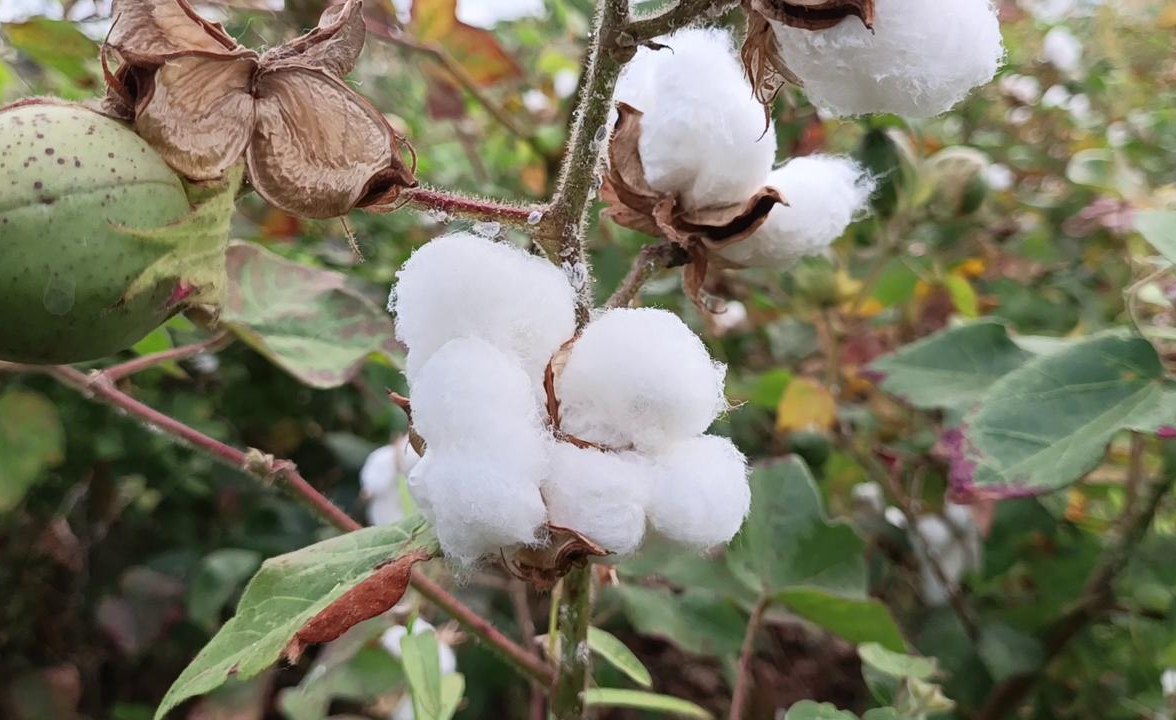
There was a time when cotton was more than just another crop in Kenya. In parts of the country, it was white gold. Farmers planted it knowing that the harvest could pay school fees, put food on the table and keep money circulating in rural communities. Cooperatives provided a link between farmers and markets, ginneries kept workers employed and textile mills had a ready source of raw material. In Mpeketoni, Lamu County, David Njuguna, chairman of the Lake Kenyatta Cooperative Society, remembers those days vividly.
He was born here and grew up watching his parents cultivate cotton on land they received in a settlement scheme established in 1976 during the tenure of Kenya’s first President, Mzee Jomo Kenyatta.
The land was fertile. The climate was favourable. But before the first crop could be planted, there was a more immediate challenge: clearing the thick natural bush that covered much of the area.
According to Njuguna, the locals had approached Mzee Kenyatta seeking tractors to help them clear the land. What they did not know was that the settlement scheme would also bring in families from the Kikuyu community, many of whom arrived with a strong farming culture. The new settlers worked alongside the local communities to clear the bush and turn the land into productive farms.
Simsim (sesame) and cotton were among the crops of choice. And cotton took off.
Njuguna says production at the time could rise to more than nine metric tonnes.
The business was booming. Then things began to change. Njuguna says the arrival of a powerful tycoon who gained control of the cotton business created a monopoly that gave him enormous influence over prices. Farmers, who had invested their labour and resources into the crop, found themselves with little bargaining power.
The consequences were devastating. Farmers became frustrated, many abandoned cotton farming and the cooperative system weakened. As farmers walked away from the crop, ginneries lost raw material, markets shrank and an industry that had once been central to the local economy began to collapse. For Njuguna, it was not simply an economic downturn. He watched an industry that had educated generations of families slowly disappear.
Now, almost half a century after his parents first planted cotton in Mpeketoni, he is watching another chapter unfold. This time, the hope is Bt cotton.
“I was raised and educated through proceeds from cotton farming,” Njuguna says, reflecting on what the crop once meant to his family.
He believes the industry is showing signs of recovery, helped by new policies, improved prices and the adoption of a cotton variety that has changed the economics of production.
Njuguna was also part of discussions around some of the policy changes affecting the sector. But he says one of the biggest obstacles remains something much more basic — getting the seed to farmers on time.
The rainy season, he argues, will not wait for bureaucracy. For farmers, missing the planting window can mean the difference between a good harvest and a disappointing one.
That challenge is particularly important because the current revival is taking place against the backdrop of a long-running national debate over genetically modified crops.
Bt cotton is a genetically modified variety engineered to provide protection against destructive bollworm pests. Kenya approved its commercialisation in 2019 after national performance trials, making it one of the most significant attempts to use biotechnology to revive the country’s cotton industry. The politics around GMOs, however, have never been simple.
Kenya’s debate over genetically modified crops has at various times centred on questions of food safety, environmental impact, regulation and public trust. For years, the arguments have often been made in laboratories, courtrooms, boardrooms and political spaces. But in Lamu, the debate is increasingly taking place in the cotton field. Farmers are looking at what the crop is doing to their yields and incomes.
For Mohammed Dikature, who has cultivated cotton for about 30 years in Lamu West Sub-County, the story is less about politics and more about survival. He has seen the industry through its highs and lows from poor prices and unpredictable weather to shortages of seed, fertiliser and pesticides. Yet he has never completely abandoned the crop. Dikature believes cotton can rise again if farmers receive the support they need, particularly better prices.
The current farm-gate price of about Sh72 (roughly US$0.55) per kilogramme, he says, should rise to at least Sh100 if farmers are to comfortably cover their costs and make a meaningful profit.
His argument goes to the heart of the cotton revival. A better seed can increase productivity, but a farmer will only continue planting if the numbers make business sense. And that is where the wider cotton value chain becomes important.
Cecily Wanjiku, another cotton farmer, points to a challenge that is less visible but potentially just as important land ownership. Many farmers, she says, do not have formal documentation proving ownership or secure tenure over the land they cultivate. That uncertainty can discourage them from making large investments in their farms.
“ Why invest heavily in a crop that takes months to mature if you are not certain you will still have access to the land? ” she asks. Wanjiku also emphasises the importance of planting within the right window. If farmers delay planting beyond March, she says, achieving good production becomes increasingly difficult.
For her, access to seed is therefore just as important as the technology itself. She appreciates Thika Cloth Mills for supplying seed to farmers and providing a ready market for their produce through the cooperative.
The company’s involvement is significant because the future of Kenyan cotton cannot be separated from the fortunes of the textile industry. Growing more cotton is only the first step.
What happens after the farmer harvests it is arguably more important.
That is where Phyllis Wakiaga, an advocate of the High Court and former Chief Executive Officer of the Kenya Association of Manufacturers, sees a much bigger opportunity.
She argues that Africa’s challenge is not simply producing commodities but developing the skills, technology, financing and industrial capacity required to turn those commodities into higher-value products.
“Africa produces about 15 per cent of the global cotton, but only does about two per cent at the point of textile and apparel,” she says, noting that even more value is lost further down the chain.
The figures expose the central weakness of Africa’s cotton economy. The continent can grow the crop but still capture only a fraction of the value generated by the finished product. Cotton can be grown in Africa, exported as raw material and then return as expensive fabric or clothing. That is the gap industrialisation is expected to close.
Wakiaga says Africa needs to ask whether it is developing the right skills for the market, how those skills can be connected to industry and how governments can work with manufacturers to build the workforce needed by modern textile factories.
Technology is another part of the equation.
Textile mills require modern equipment if African manufacturers are to compete with producers elsewhere in the world. That means investment and, according to Wakiaga, access to patient and affordable development finance that allows industries to upgrade their technology. It is an argument that puts the cotton farmer at the beginning of a much bigger story. When a farmer plants cotton in Mpeketoni, the economic journey should not end at the ginnery.
The cotton has to be ginned.
The lint has to be spun into yarn.
The yarn has to be turned into fabric.
The fabric has to become garments and other finished products.
And every stage should create jobs, businesses and opportunities.
That is the industrial promise of cotton.
It is also why the renewed interest in Bt cotton matters beyond Lamu.
According to Lamu County officials, the county now accounts for about 60 per cent of Kenya’s cotton production. Yields that once averaged between 300 and 500 kilogrammes per acre with conventional varieties can now exceed 1,500 kilogrammes on well-managed Bt cotton farms.
The number of farmers interested in the crop has also risen sharply, from fewer than 3,000 to more than 15,000, according to the county government.
Production is expected to reach about nine million kilogrammes this season, compared with approximately 3.2 million kilogrammes last year, provided weather conditions remain favourable.
For a generation that watched cotton collapse, the renewed interest is both encouraging and cautious. Njuguna has seen the industry rise once before. He has also seen it fall. He knows that a good harvest alone will not rebuild what was lost. The farmer needs a market. The ginnery needs cotton. The textile manufacturer needs lint. The worker needs skills. The investor needs confidence. And the consumer needs a competitive Kenyan product.
That is the real test facing Kenya’s cotton comeback.
Bt cotton may have opened a new chapter, but the bigger question is whether Kenya can use this opportunity to rebuild an industry that goes beyond the farm — one that produces, processes and manufactures locally.
For the farmers of Mpeketoni, the first signs are already visible in the fields.
The white gold is returning.
