

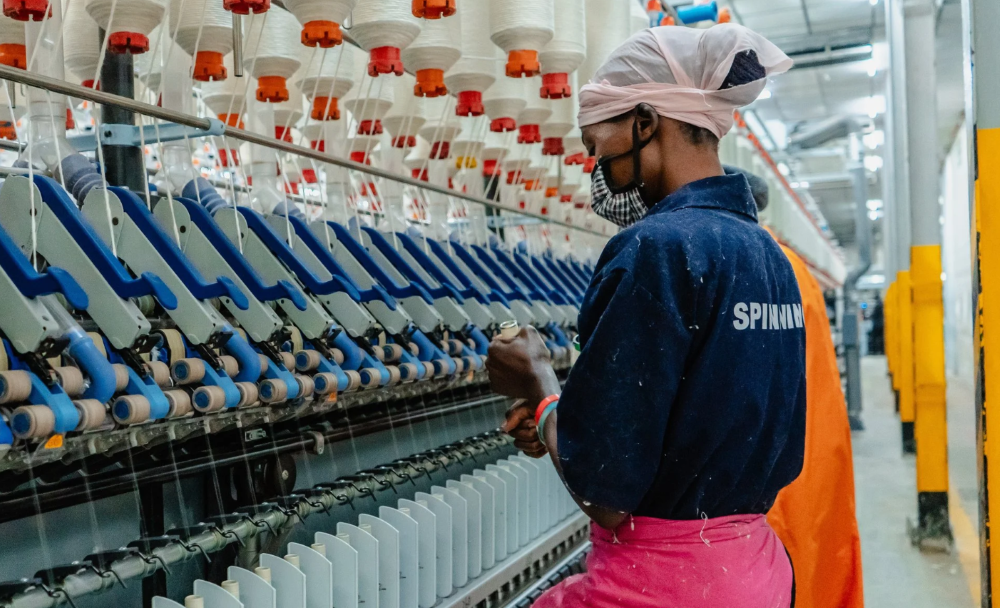
Fine Spinners Uganda Limited is investing an additional USD 5 million in machinery at its Kampala textile mill, with a new weaving operation intended to broaden its product range and support expansion into African and overseas markets.
The investment offers a concrete example of how a manufacturer can connect locally grown cotton with more stages of industrial production. Its commercial test will be whether additional capacity becomes sustained orders, higher exports and greater demand for Ugandan cotton.
In written responses to AfricaBusiness.com on 28 September 2026, chief executive Sav Bedi said most of the new equipment had been installed and commissioned and was undergoing pre-production trials. Commissioning of the weaving plant was scheduled to begin in October, with full production targeted by the end of 2026.
The company expects the programme to increase output by 30–40% over the next two to three years and create 150–200 direct jobs. These are company targets rather than completed results.
A new weaving operation
The machinery programme spans spinning, knitting, dyeing and finishing, sewing-thread production and weaving. Bedi identified Saurer ring frames, a Rieter Autoconer, Picanol looms and Prashant warping equipment among the purchases. Dyeing and finishing additions include Fong’s machines, Bianco equipment and a Brückner stenter, used to control fabric width and finishing.
Weaving is the main new capability identified in the expansion. Fine Spinners expects it to add approximately 100,000 metres of woven fabric capacity a month, opening opportunities beyond its established knitted fabrics and garments.
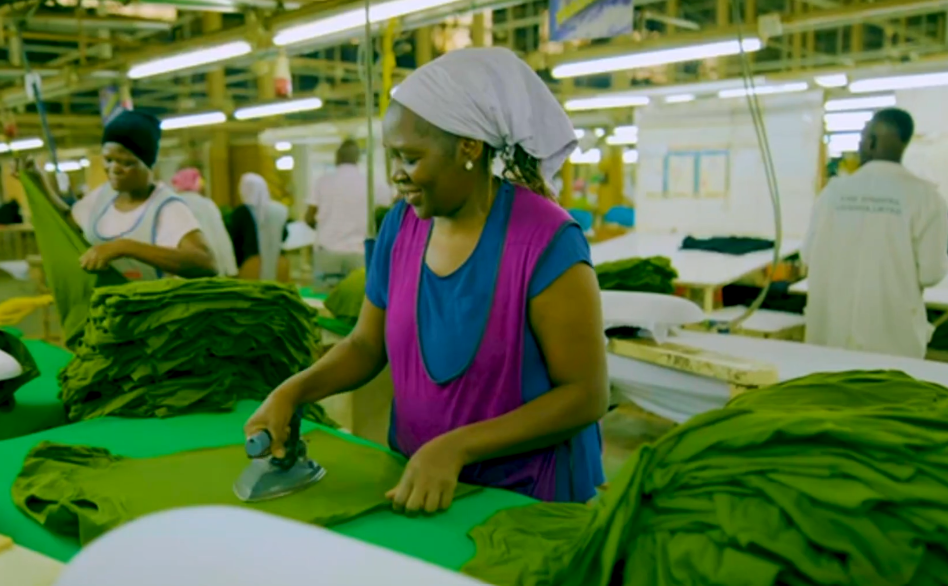
Bedi put existing garment capacity at approximately 500,000 pieces a month and said the investment could add 150,000–200,000 pieces. Capacity describes what the mill can produce; the realised increase will depend on orders, equipment performance and how production is scheduled.
The company sees a particular opportunity in supplying fabric to garment manufacturers in Kenya’s export processing zones. For those buyers, a regional fabric supplier could provide another sourcing option alongside imported material. Commercial uptake will depend on specifications, price, consistency and delivery.
Connecting cotton with industrial demand
Fine Spinners says all the cotton lint it spins is Ugandan. Bedi reported annual purchases of approximately 7,000–10,000 bales and around 15,000 directly contracted smallholder farmers, principally in Kasese and northern Uganda. The company also buys lint from two or three ginneries and works with local packaging, transport and maintenance suppliers.
In a clarification supplied on 5 October, the company said its expansion target was to buy approximately 2,000 additional bales annually. That is an increase above existing consumption, rather than a total purchasing target of 2,000 bales.
Processing cotton through yarn, fabric and garments creates demand for more activities than selling lint alone. The link to farmers nevertheless depends on reliable procurement and production: installed machinery by itself does not establish higher farm incomes or guarantee additional cotton purchases.
Bedi identified the incentive to export raw lint instead of processing it locally as one constraint on the industry. He also cited electricity reliability, the cost and duration of finance, inland transport costs and technical skills.
Skills and export markets
The mill employed approximately 1,600 people at Bugolobi, Kampala, according to Bedi’s September responses. The planned additional jobs would be on the same site. Training is particularly important for loom technicians, warping and sizing operators, and weaving mechanics as the new operation develops.
Bedi said local operators were being trained on the job under experienced technicians and machinery suppliers’ commissioning engineers. The practical challenge is to build the skills needed to maintain equipment and deliver consistent production after installation support ends.
Fine Spinners reported supplying Germany, Denmark, Spain, Gabon, South Sudan, Rwanda and Kenya, alongside Uganda. Its immediate African targets are the Democratic Republic of the Congo, Zambia and Ethiopia. It also aims to enter Japan and expand its European business.
The company put its sales mix at approximately 40% Uganda, 30% other African markets and 30% outside Africa, measured by value rather than physical output. Over two to three years, it targets export turnover growth of approximately 30% and entry into two or three new export markets.
“The mill was designed to compete on quality and integration rather than on a single trade preference, and that has proved to be the right approach,” Bedi said, discussing how the loss of Uganda’s AGOA access had affected its export strategy.
He said the company had redirected garment export efforts towards Europe and was pursuing Japan, while also supplying fabric to Kenyan garment manufacturers. These are different routes to customers, each with its own buyer requirements and market-access conditions.
Investment funding and sector support
Bedi said the additional USD 5 million is financed entirely through shareholder equity and retained earnings, with no grant, subsidy or concessional loan attached to this programme.
He also clarified the investment totals. Approximately USD 30 million represented machinery investment before the programme; the new spending takes that machinery figure to USD 35 million. The roughly USD 40 million previously cited for the Ugandan operation includes a broader set of assets, such as buildings, site rehabilitation and utilities. These figures measure different categories and should not be added together.
Financing this particular investment from company resources is separate from the public support available to textile manufacturing. In its October clarification, Fine Spinners described a government cotton buffer arrangement intended to help mills obtain lint throughout the year, alongside sector electricity and VAT incentives. That response outlines support mechanisms rather than a quantified history of all assistance received by the business.
Measuring the gains
Fine Spinners reports that new dyeing equipment can reduce water and steam consumption per kilogram of fabric by 20–30%, while the new stenter can reduce energy consumption per metre finished by 15–20%.
The company said these figures originated in manufacturers’ declarations and had subsequently been checked during factory operations. It did not provide measurement periods or the detailed comparison baseline. They should therefore be read as company-reported improvements, rather than independently verified mill-wide savings.
For customers and suppliers, the most useful evidence of progress will be operating results: commissioned machinery producing saleable fabric, repeat orders in new markets, additional cotton purchases and jobs that continue beyond the installation period.
Fine Spinners’ expansion sets out a route from agricultural supply to a wider manufacturing offering. Its significance for Uganda will depend on how consistently that route delivers commercial demand and production over the coming years.
Sources
Written responses attributed to Sav Bedi, CEO of Fine Spinners Uganda Limited, supplied through Media Fast PR on 28 September 2026, with clarifications on 5 October 2026. Company website: https://finespinners.com/
Factory photographs: Fine Spinners Uganda Limited. Both factory photographs show the company’s Kampala mill in 2026 and are used with permission.
