


The Central Bank of Nigeria (CBN) has decided to maintain its benchmark interest rate at 23%. This move keeps borrowing costs high for both households and businesses. The decision was made during the recent Monetary Policy Committee (MPC) meeting on November 23 and 24, 2026.
By keeping the Monetary Policy Rate (MPR) at this level, the apex bank has opted not to lower rates, which means loans will remain costly.
Also, the CBN has also kept the Standing Facilities Corridor unchanged, which allows banks to borrow overnight funds at a rate of 23.5% and earn 20% on deposits made with the bank.
Furthermore, the Cash Reserve Requirement (CRR) remains at 45% for deposit money banks, 16% for merchant banks, and 75% for non-Treasury Single Account (TSA) public sector deposits. These requirements dictate how much money banks need to keep in reserve rather than lend out.
Although annual inflation is easing, the announcement implies a longer wait for those looking for cheaper loans.
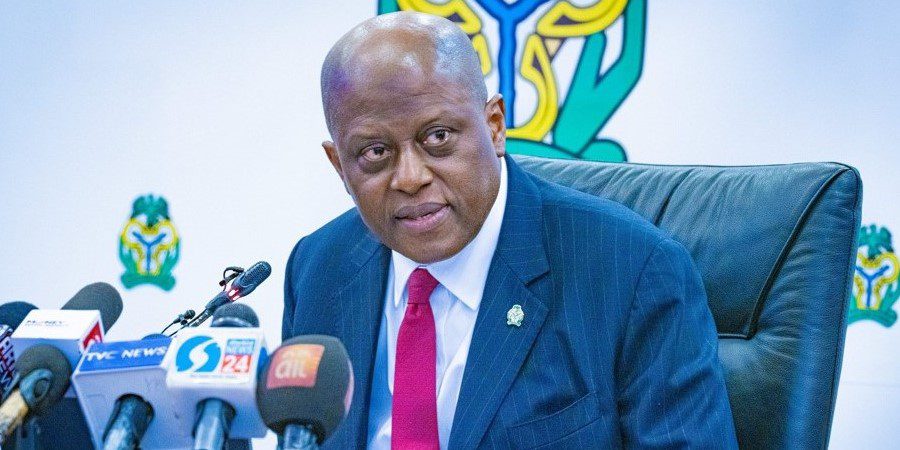
Why the CBN kept rates are unchanged
The decision comes after the Monetary Policy Committee (MPC) held its September meeting, during which it reduced the monetary policy rate (MPR) by 350 basis points, bringing it down from 26.5% to 23%. This marked the committee’s second rate cut in 2026, following a previous reduction of 50 basis points to 26.5% in February.
Before the September adjustment, the rate had been held steady at 26.5% during both the May and July meetings.
The November meeting is significant as it is the first MPC decision following the September changes, and this time, the committee opted to keep the benchmark rate unchanged.
There are valid reasons for this cautious approach.
According to the National Bureau of Statistics, Nigeria’s headline inflation eased to 14.06% in October, down from 14.63% in September. However, the monthly inflation rate saw an increase, climbing to 0.43% from just 0.06% in September. This indicates that while the annual rate of inflation is slowing, prices are still on the rise month-to-month.
The naira is also facing renewed challenges. On November 23, it weakened to ₦1,394.01 per dollar in the official foreign exchange market, compared to ₦1,389.73 the previous trading day. Additionally, external reserves fell from approximately $55.25 billion in September to $54.6 billion by November 23.
These developments present a tricky situation for the Central Bank of Nigeria (CBN).
Lowering interest rates further could encourage borrowing and boost economic activity, but it might also make naira-denominated investments less appealing and put additional pressure on the foreign exchange market. A weaker naira could lead to higher costs for imported goods and production inputs.
By holding the rate steady, the committee seems to want to carefully evaluate the impacts of the September adjustment and keep an eye on these emerging risks before making any further changes.

Similar read: Nigeria’s inflation falls to 14.06%, but cost of living keeps rising
Here is how these policies affect you…
For many Nigerians, the immediate impact of this situation is that borrowing could continue to be expensive. While the Monetary Policy Rate (MPR) is not the exact interest rate that everyone pays on loans, it does significantly influence the overall cost of borrowing in the financial system.
Banks take into account their funding costs, operational expenses, and the risk associated with lending to different customers when determining their loan rates.
This means that a change in the MPR does not necessarily lead to an increase in current loan repayments, nor does it ensure that every bank will keep its lending rates the same. However, it does eliminate the chance of a quick reduction in the Central Bank of Nigeria’s benchmark rate, which could have provided an opportunity for cheaper credit.
Small businesses that rely on bank loans to buy inventory, pay suppliers, or expand their operations might continue to grapple with high financing costs. Similarly, households looking for personal loans or salary advances may find that borrowing remains quite costly.
For those who save, the situation is a bit more complex.
A high policy rate generally offers more appealing returns on fixed deposits and other interest-bearing accounts, though it is still ultimately up to banks and investment firms to set their own rates. So, a stable policy rate doesn’t guarantee that savings rates will stay the same.
Another crucial aspect of the CBN’s decision is the unchanged Cash Reserve Requirement (CRR). This is the proportion of eligible customer deposits that banks must hold with the Central Bank as reserves, essentially funds that a bank cannot use for loans or other purposes.

For instance, if the CRR is set at 45%, a bank must hold ₦45 out of every ₦100 in eligible deposits as reserves. The remaining ₦55 is not automatically available for lending, as banks still need to meet various regulatory and liquidity requirements. This reserve requirement restricts how much of their deposits a bank can actually lend out.
The 75% CRR on non-Treasury Single Account (TSA) public sector deposits is particularly notable. TSA is a system that consolidates government revenues in a central account at the Central Bank, instead of having them scattered in various commercial bank accounts. Non-TSA deposits refer to public sector funds that fall outside this central arrangement.
By mandating that banks keep 75% of these deposits as reserves, the Central Bank limits how much of that government money banks can use for lending.
This requirement differs from the 45% CRR that applies to other eligible deposits in banks. It means that banks holding significant amounts of non-TSA public sector funds have less flexibility to use these specific deposits for lending.
As for fintech companies, the impact varies based on their specific operations. Payment companies that do not take deposits or extend credit will not face the same reserve requirements as traditional banks. However, digital lenders and fintechs partnered with licensed financial institutions could feel the effects indirectly through funding costs and access to credit.
Also read: CBN may impose tougher rules on OPay, Moniepoint, PalmPay and other fintechs under new bill
