

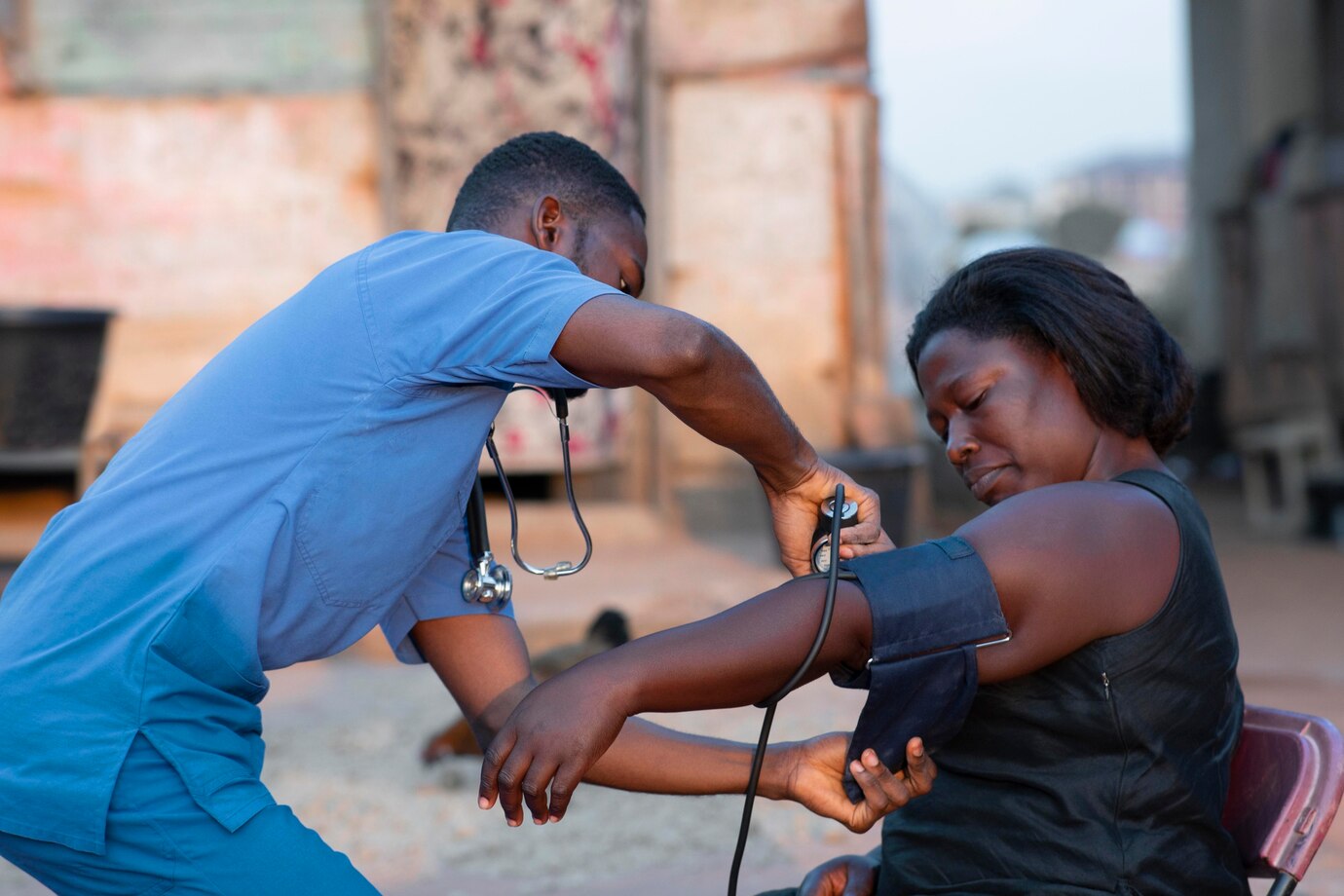
Africa is experiencing one of the world’s fastest technology expansions. Over 645 million Africans now use mobile internet. Telecommunication companies generate billions in annual revenue, and digital services have transformed banking, trade, and communication. Yet this digital growth has not strengthened citizens’ right to health. Hospitals rely on paper records, clinics lack essential equipment, and emergency response systems remain weak or absent.
Africa carries 24% of the world’s disease burden but employs less than 3% of the global health workforce. This gap limits people’s right to live healthy lives. Governments can rectify this imbalance by using existing mobile networks to deliver basic healthcare, linking telecom profits to health system funding, and aligning digital expansion with access to physical healthcare services.
Africa’s digital growth has not resulted in better health outcomes for ordinary citizens. Rural communities often have mobile internet but no nearby clinic, forcing families to travel long distances to access healthcare services and resulting in delayed care. Consequently, many preventable illnesses become deadly, and poor families face high out-of-pocket healthcare expenses.
If this imbalance persists, inequality will deepen, digital progress will benefit only those who can afford private care, and public trust in institutions will erode. Technology risks amplifying exclusion instead of expanding freedom, dignity, and the fundamental right to health.
Digital networks are the primary beneficiaries of Africa’s tech revolution. They ought to bear a proportional responsibility for the health of the populations they serve, through mobile-enabled health services, telecom levies, and tech-health parity laws. Governments and Ministries of Health should partner with telecom companies to integrate appointment scheduling, vaccination reminders, and follow-up care into existing mobile services. Rollout should begin in public primary care facilities where access gaps remain widest, reducing travel costs, saving time, and ensuring that Africa’s digital progress benefits all citizens.
Telecom levies are necessary to fund and expand access to health services. Parliaments and finance ministries can legislate a fixed percentage of annual telecom revenues and spectrum license fees for emergency medical services, hospital tech upgrades, and digital health networks. To ensure this does not hinder digital inclusion, these levies should target high-level corporate profits rather than increasing taxes on consumer data usage. Communications regulators should enforce compliance through licencing conditions and audits, while ministries of health manage ring-fenced funds with public reporting.
To address potential risks to investment and digital inclusion, the implementation of these levies must be carefully calibrated. Levy rates should be set through transparent regulatory consultation, benchmarked against sector profitability, and phased in gradually to avoid market disruption. The goal is not to penalise digital growth but to require that it pays a structural dividend to the populations it depends on.
Complementarily, tech-health parity laws are also necessary for network expansion. Governments can implement parity laws by including health infrastructure requirements in telecom licensing agreements. Ministries of Communication and Health can jointly identify underserved areas, plan construction, and provide staffing and equipment. Telecom companies can finance construction through licensing conditions, while local governments ensure ongoing maintenance. This ensures digital connectivity does not outpace access to essential medical services.
Africa’s health tech challenge is not merely a health policy problem but a tech ecosystem failure. Healthy populations are the essential foundation of productive, growing digital markets, making this a critical structural risk for the tech sector. When communities lack access to basic healthcare, they face higher mortality and reduced workforce participation, which directly suppresses the economic growth needed to drive digital adoption.
Telecom companies, fintechs, and investors pouring capital into African infrastructure rely on a growing, economically active user base to generate returns. However, the same communities driving subscriber growth are being failed by infrastructure gaps in the public health sector, limiting their long-term economic participation. Aligning digital expansion with healthcare access is necessary to sustain Africa’s digital economy.
Africa’s tech revolution is advancing rapidly, but public healthcare is being sidelined, undermining citizens’ fundamental right to health. If action is not taken, millions will continue to face preventable illness, rising costs, and eroded trust in public institutions. Governments should integrate digital expansion with healthcare funding and ensure clinics are physically accessible to all citizens. Strengthening healthcare alongside technology safeguards the fundamental right to health, protecting the freedom, dignity, and life of everyone.
____
Gideon Danso is a writing fellow at African Liberty.
