

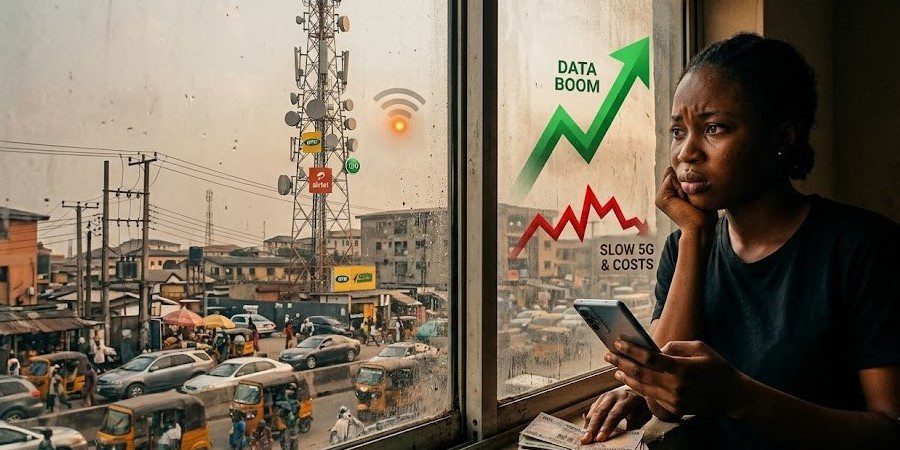
The telecommunications industry witnessed a mix of outcomes, policy formations and challenges during the first half of 2026. These, in turn, have shaped the experience of millions of Nigerians making calls, sending SMS and accessing the internet daily for business and personal attainment.
In this article, we will explore and explain these numbers and growth and the shortfalls that they indicate.
Let’s start with the positive.
1. The good
Data consumption
Industry reports released between January and April indicate that the internet has become a critical part of citizens’ existence. Within the first four months of 2026, telecom operators gained more than 6.6 million new internet subscribers.
March and April recorded the top two months with the most data consumed since the Nigerian Communications Commission (NCC) started recording the statistics in January 2023 with with 1.422 million terabytes and 1.414 million terabytes.
The result is significant revenue growth for operators.
MTN Nigeria recorded ₦826.1 billion from data during the first quarter (a 55.15% of the operator’s total revenue of ₦1.498 trillion). Similarly, Airtel Nigeria’s data revenue of $244 million (₦329.4 billion) powered its total revenue for the quarter to $475 million (₦641.3 billion).

4G is gaining control
At a time when a quality internet experience is what defines the value of data prices, the network’s strength becomes critical. While a majority of internet users use the 2G/3G spectrums, the industry report indicates that 4G is taking over.
In 2026 alone, 4G gained 1.95% additional market share to retain a 54.41% majority. While the growth is small, the impact is worthwhile. It shows the continued switch off from the old network to a technology that can sustain the desired internet penetration and smartphone demand for quality pictures and videos
Compensation
The first half of the year saw a significant consumer victory after the NCC directed telecom operators to compensate Nigerians who experienced poor service between November and January 2026.
Although the gains within the period covered pale when compared to complaints over bad service. The implication is that regulators and operators can no longer play hide and seek with quality service delivery. It shows that priority is still given to consumers who deserve reliable networks and value for their voice and data subscriptions.

Investment and infrastructure upgrade
Following the 50% telecom tariff hikes, operators promised to diversify their retained earnings to invest in new infrastructure and upgrades.
In a recent statement, the NCC noted that telecom operators will be deploying over 12,000 additional coverage and capacity sites to improve service quality, where 5,000 have already been completed, a 40% completion rate. The development stands as one of its most extensive network expansion and modernisation cycles in recent years
For the top two telcos, MTN Nigeria increased its capital expenditure (CAPEX) from ₦900 billion in 2025 to over ₦1 trillion and said it already deployed ₦390.3 billion in Q1.
NTP 2000 Review
A defining moment for Nigerian telecoms in 2026 is the move to review its 2000 telecommunications policy. Coming 26 years later reflects an adjustment to today’s realities.
The review will address the kind of policy framework Nigeria needs for the next phase of digital transformation.
The priorities are now clear. The update will integrate AI, satellite broadband, Internet of Things, and cloud infrastructure and set new targets.

Also Read: Experts call for telecom policy that delivers jobs and digital growth.
2. The bad
Slow internet
Customers complained about dropped calls and poor internet experience in the first half of 2026. This is especially sad because voice and data services have become a critical part of how people work, learn, do business and stay connected with friends and loved ones.
By implication, Nigerians are not getting the value for money despite a tariff hike. This forced the NCC to ask operators to compensate subscribers who experienced an epileptic network. Another major source of complaints is data depletion: a situation where data burns faster than use.

Conversely, operators have blamed background app updates, auto-playing media, and high-definition streaming for the unexplained consumption. Recent smartphone models that require a high interface and generate quality media are also tagged as causal agents.
Early June, MTN Nigeria tried to make justifications for this with its Data on Trial event to reveal no deliberate data manipulation. Also, operators have made an effort to roll out a data calculator, all in an effort to prove no deliberate data depletion.
However, several subscribers have continued to raise concerns while telecom operators are yet to provide an acceptable explanation.
Diesel price hike
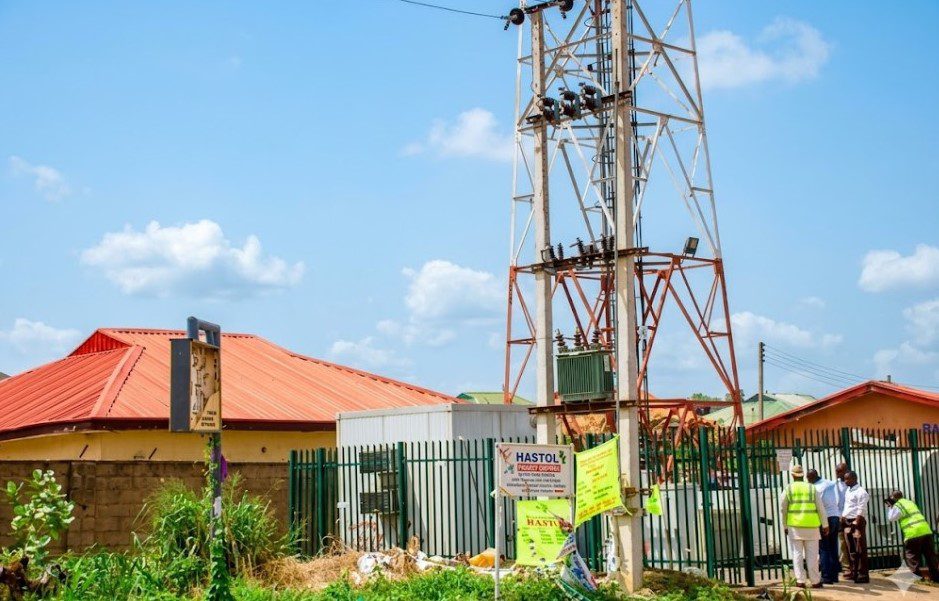
Epileptic power supply is a major concern for operators, increasing significantly their daily operational expenses. Telecom operators heavily depend on high-cost fuels like diesel, which cost about ₦1,800 to ₦1,950 per litre.
At a recent industry conversation, it was revealed that telecom operators use 40 million litres to power base stations every month, amounting to a rough cost of ₦72 million per month. The high cost of diesel, coupled with the erratic power supply, affects both the supply of quality service and hinders the demand for such.
3. The ugly
5G is still crawling
Compared to other African countries, Nigeria lags in 5G market share, with 4.34% of internet users in April 2026.
A recent quality of experience report showed that about 27% to 31% of capable devices use 5G services in Nigeria’s biggest cities. This means that 7 in 10 people who own 5G-enabled smartphones in these cities cannot connect to the 5G network. In most scenarios, the phone connects to the nearest available 4G or 3G service.
This continues to prove that a critical issue exists in the Nigerian telecom industry. And that Nigeria’s rollout remains far behind device readiness, exposing a gap between users’ potential and network availability.
Also Read: How 5G connections in Sub-Saharan Africa are expected to grow 11x to 370 million by 2031
Fibre cuts and equipment theft
Despite the designation of telecom equipment as critical network infrastructure, vandalism and theft are still on the rampage.
Across the first four months, there were 5,929 reported cases of fibre cuts and 1,444 cases of equipment thefts. In 2025 alone, 152 generators and 504 batteries were stolen from mobile sites, with 1,344 separate incidents of diesel theft.
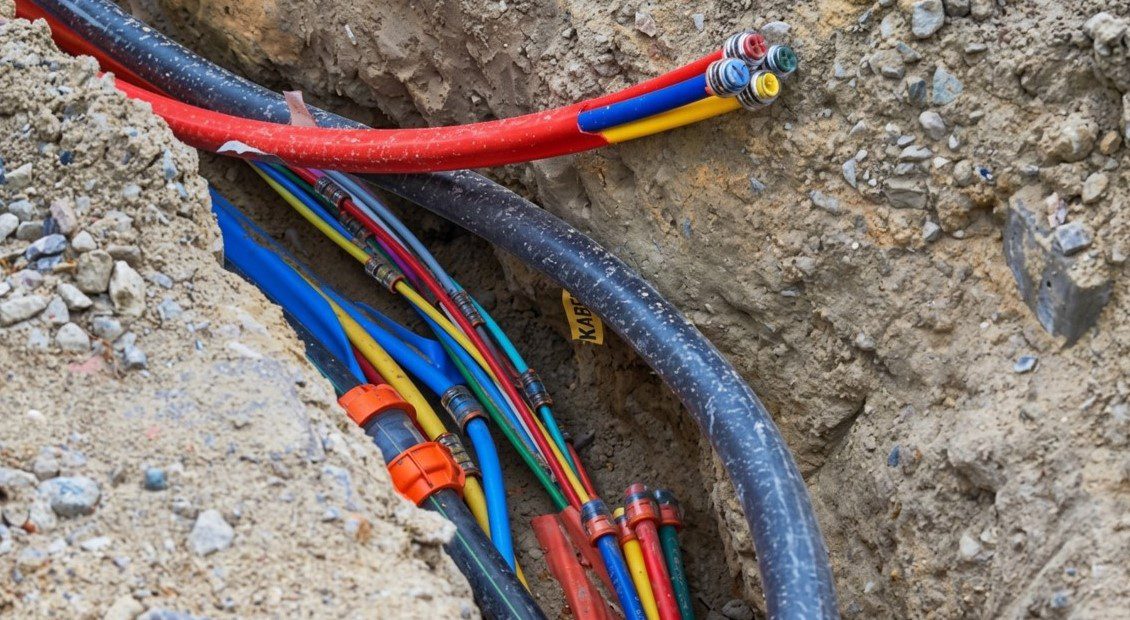
These incidents strain quality network delivery and reliable value provision.
In sum
The Nigerian telecoms industry is expanding, and the influx of internet users and data demand form a large part. Network outages and 5G coverage gaps continue to stymie its full potential.
